
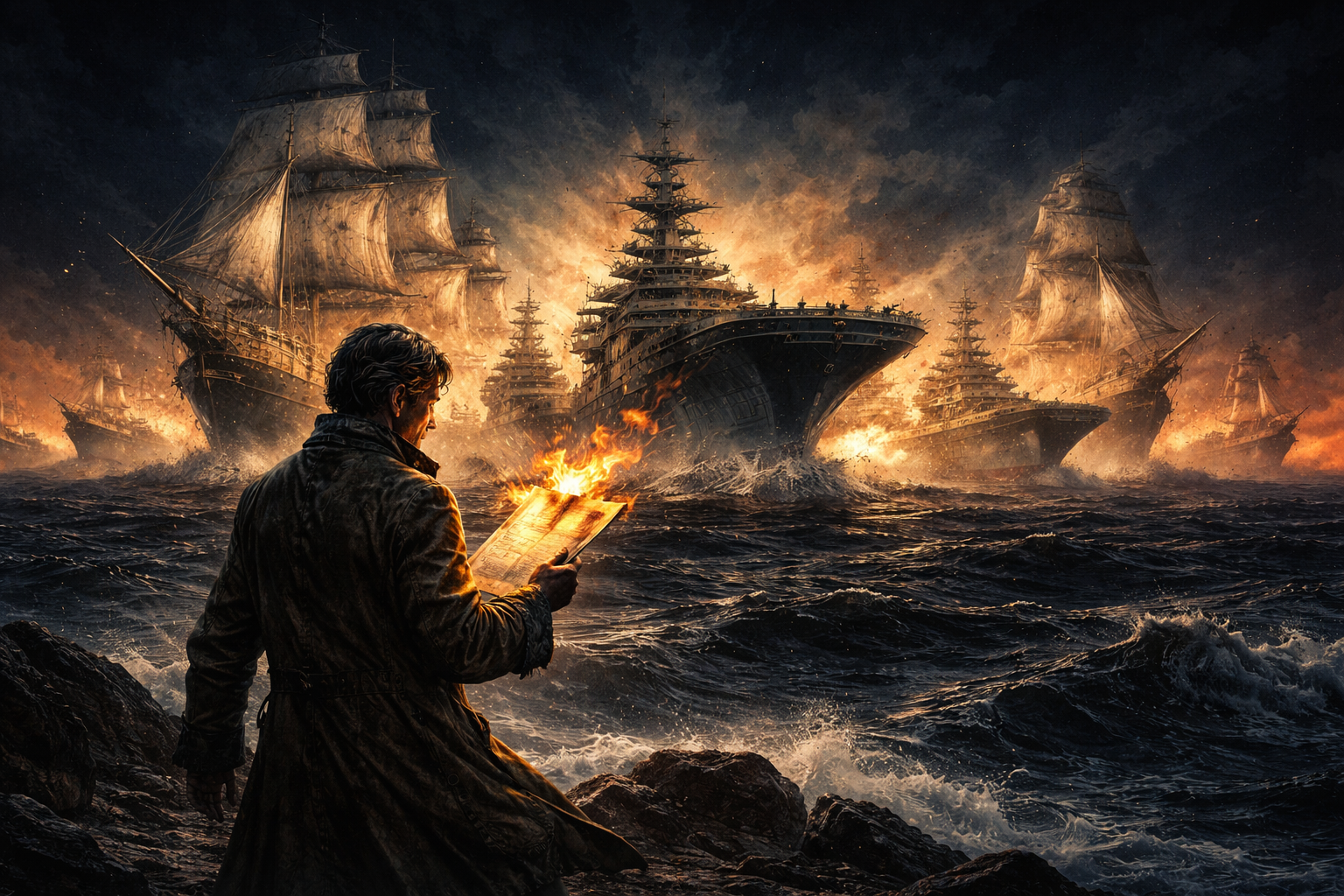
I have seen armadas before.
I watched the British fleet fill the harbors of the colonies with enough timber and cannon to remind every farmer, every shopkeeper, every printer’s apprentice that the Crown could reach across an ocean and crush what it could not control. I watched men in powdered wigs explain, with great patience and condescension, that this show of force was for our own protection. That the King loved his subjects. That resistance was not merely futile but ungrateful.
The ships were always for our own good. The wars were always necessary. The cost in blood was always someone else’s to bear.
On February 28, 2026, the United States of America, in coordination with the state of Israel, launched a military assault on Iran. They called it Operation Epic Fury. The name alone should concern you. Fury is not strategy. Fury is not deliberation. Fury is what happens when power stops pretending it needs a reason.
Today is Day Thirteen. Let me tell you what fury has purchased.
Seven American service members are confirmed dead. Six killed by an Iranian drone at a civilian port in Kuwait. One killed at an air base in Saudi Arabia. Another soldier died in a non-combat incident at Camp Buehring. Over one hundred and forty have been wounded, eight of them severely. And today, as I write, a KC-135 refueling tanker has crashed in western Iraq with six crew members aboard. Rescue operations are underway. Their fate is unknown. The Pentagon says it was not hostile fire. An Iraqi militia says they shot it down. The truth, as always in war, will arrive too late to help.
Over thirteen hundred Iranians are dead, including more than two hundred children. One hundred and sixty-five schoolgirls were killed in a single strike on a school in Minab. Fifty-five health workers have been killed. Twenty-nine medical facilities damaged. Three million, two hundred thousand people have been displaced. UNESCO World Heritage Sites in Isfahan, monuments that survived centuries of conquest, have been damaged by the forces of a republic that once believed it was building something, not destroying it.
Iran’s Supreme Leader was assassinated in the first hours. His son, Mojtaba Khamenei, has been named successor. Today he issued his first public statement, vowing to keep the Strait of Hormuz closed and to continue attacks on American bases. The war the President promised would last “four to five weeks” has produced a new Supreme Leader who has promised it will not end.
The Strait of Hormuz, through which one fifth of the world’s oil supply passes, is effectively shut. The International Energy Agency has called it “the largest supply disruption in the history of the global oil market.” Nineteen commercial ships have been attacked. Oil tankers have been set ablaze in Iraqi territorial waters near Basra. Iran is planting naval mines in the strait. A Thai cargo ship was struck and sunk, three crew members missing. Kuwait’s airport was hit by Iranian drones today. A French service member was killed in the Kurdistan region of Iraq. Brent crude closed above one hundred dollars a barrel. The S&P 500 fell again. Gas prices have jumped sixty-one cents in a month. The Strategic Petroleum Reserve is being drained by one hundred and seventy-two million barrels, a forty-one percent reduction, to levels not seen since the nineteen eighties.
And the United States Energy Secretary admitted today that the Navy is “not ready” to escort tankers through the strait because “all of our military assets right now are focused on destroying Iran’s offensive capabilities.” The strait will not reopen, he said, for weeks. Perhaps by the end of the month.
This is what fury purchased. With your money. In your name. Without your permission.
The President of the United States announced the operation not with an address to Congress, nor with a speech to the nation from behind the desk where such grave words are meant to be spoken, but in a video posted to the internet. He did not define the objectives. He said, “Whatever it takes.”
I ask you, reader: when a man with the power to send your children to die says “whatever it takes” without telling you what it is, what word do you use for that? I will tell you the word I use. I used it in 1776 and I will use it again now.
Tyranny.
Let me be plain about what happened and what did not happen, for the distinction is the whole of the matter.
What happened is that the President ordered the military to strike a sovereign nation, kill its head of state, and begin a campaign aimed at what his own Secretary of State has described as dismantling a regime. What did not happen is that Congress voted to authorize it. What did not happen is that the people’s representatives were asked whether this war should be fought, at what cost, for what purpose, and with what plan for the day after the last bomb falls.
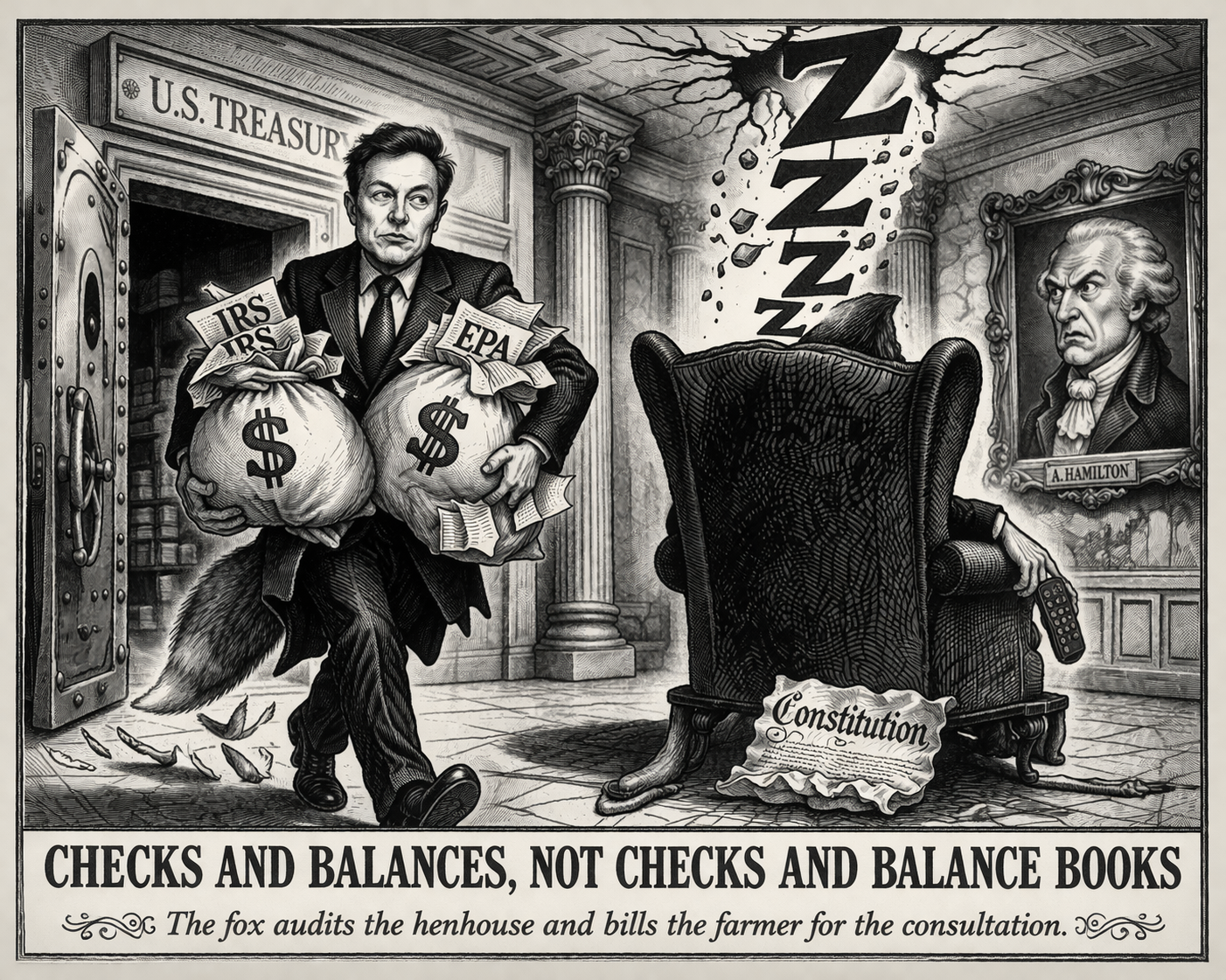
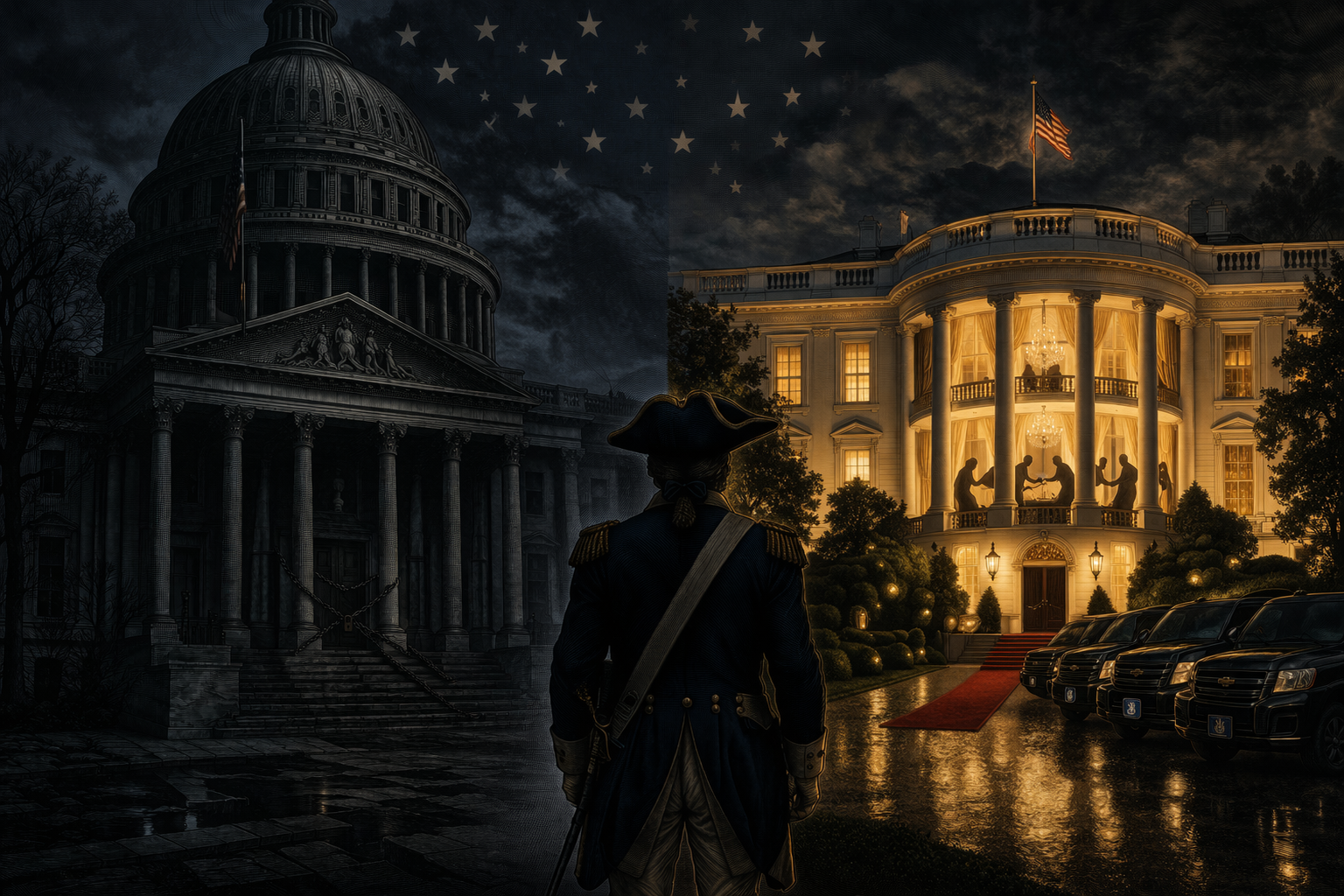
The Constitution of the United States places the power to declare war in the hands of Congress. Not the President. Not the Pentagon. Not the Secretary of Defense, who posted the announcement of a supply chain risk designation against an American technology company and the commencement of hostilities against a foreign nation on the same social media platform in the same afternoon. Congress. The people’s house. The body elected to deliberate on precisely this question, because the men who wrote that document understood, from bitter and personal experience, that the power to make war is the most dangerous power a government can hold.
I know this because I was there when they debated it.
James Madison argued that the executive must never hold the sole authority to commence hostilities, because the temptation to use military force for political purposes would prove irresistible to any leader who faced no check on that power. He was not speculating. He was describing every king he had studied and every tyrant I had written against. The clause was not an afterthought. It was a guardrail built by men who had seen what happens when one person can send a nation to war on the strength of his own judgment and the weakness of everyone else’s silence.
That guardrail has now been removed. Not by amendment. Not by repeal. By habit. By the slow, corrosive repetition of presidents who act first and notify later, who stretch the War Powers Resolution until it covers whatever they have already done, who treat the 48-hour notification requirement not as a constraint but as a courtesy, like a thank-you note sent after the house has already burned down.
I hear the objections already, because they are the same objections I heard two hundred and fifty years ago, dressed in different clothes.
Iran is a threat. Perhaps it is. But the intelligence reports now emerging suggest that Iran’s long-range missile capabilities would require until 2035 to develop, and that the claims justifying immediate military action echo, almost to the syllable, the claims made about Iraq in 2003. Those claims were lies. The men who told them knew they were lies. And the cost of those lies was measured in hundreds of thousands of lives and twenty years of war that accomplished nothing the liars promised.
The President acted to protect American lives. Seven American service members are confirmed dead, with six more unaccounted for in the wreckage of a tanker in western Iraq. Over one hundred and forty have been wounded. Iran has struck American bases across the Gulf. A regional war is spreading across at least a dozen countries. If this is protection, I should hate to see the alternative.
There was no time for deliberation. There was time enough to build an armada. Aircraft carriers and destroyers were deployed to the Gulf over weeks. The President posted warnings on social media for a month. Negotiations were conducted through intermediaries in Oman and Geneva. Plans were drawn, targets selected, operations choreographed. There was time for all of this, but somehow there was no time to ask Congress whether the American people wished to go to war.
Israel was going to act anyway. This is the justification Secretary Rubio offered to Congress, and I confess it is the one that angers me most. That the United States entered a war not because its own security demanded it, but because another nation had already decided to act, and we could not bear to be left out. This is not the reasoning of a sovereign republic. This is the reasoning of a country that has surrendered its judgment to the momentum of events. It is the logic of a man who jumps off a bridge because his friend jumped first.
I wrote Common Sense in the winter of 1776 because I believed the common people of America were capable of governing themselves. That was a radical proposition then. It should not be radical now. But it has become radical again, because the promise at the heart of this Republic, that the people rule, that power answers to them and not the reverse, has been allowed to rot from neglect.
Congress voted this week. In both chambers. Both parties had their chance to assert the authority the Constitution assigns them. Senator Tim Kaine of Virginia, who has been fighting this fight for years, forced the vote. Representative Thomas Massie of Kentucky, a Republican, co-sponsored the House resolution and argued on the floor that the Constitution’s assignment of war powers to Congress is not a suggestion.
They failed. The Senate voted forty-seven to fifty-three. The House voted two hundred and twelve to two hundred and nineteen. The margins were narrow enough that a handful of members could have changed the outcome. They chose not to.
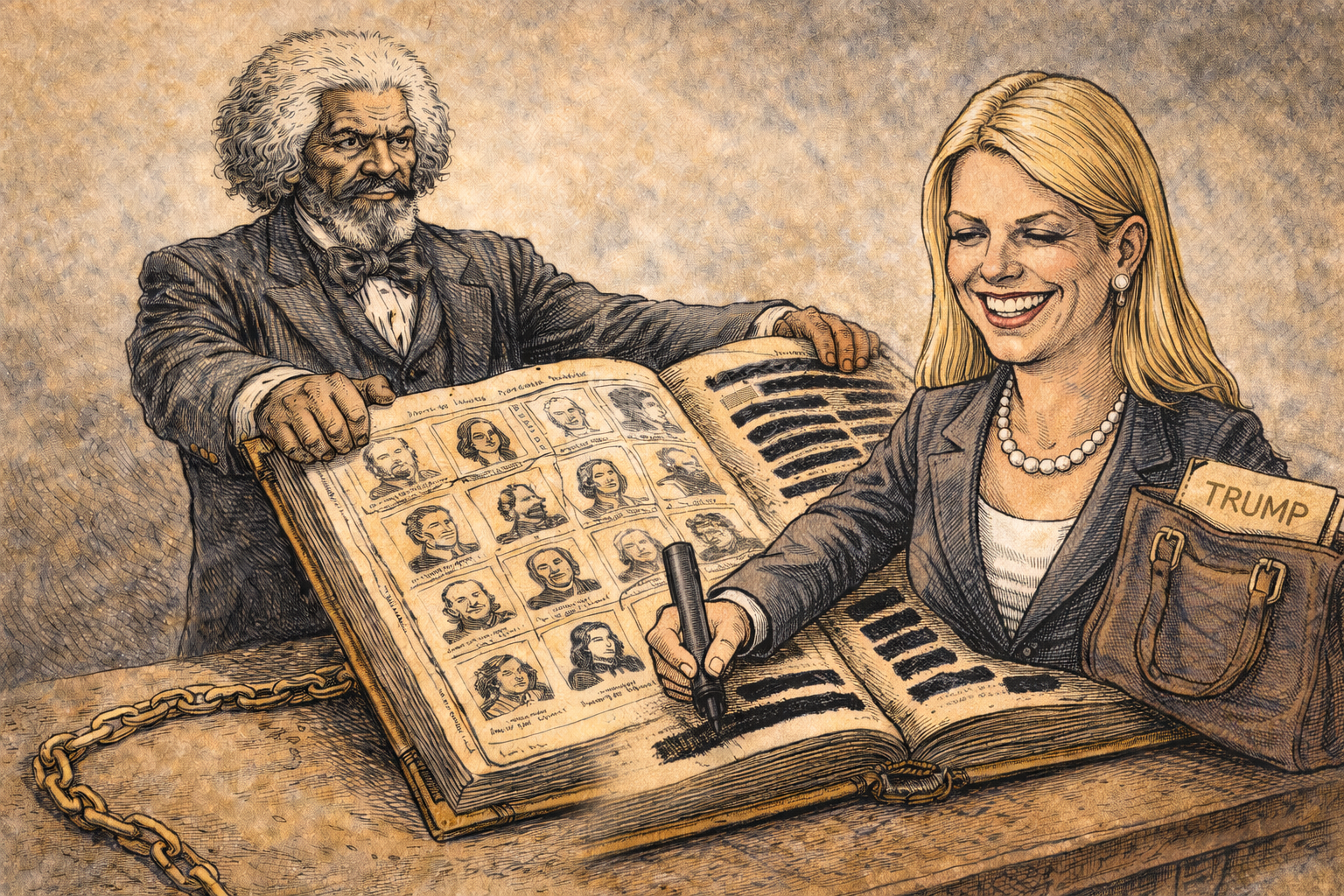
But the votes were recorded. The names were written down. History keeps a ledger, and I have had occasion, from my particular vantage point, to review it. I can tell you that the men who voted for the Gulf of Tonkin Resolution in 1964 and the Authorization for Use of Military Force in Iraq in 2002 did not age well in that ledger. And the men and women who voted this week to surrender their constitutional authority, to wave the flag while handing the war power to a single man, will not age well either.
And the fight is not over. Six Democratic senators have announced they will use every procedural lever available to force daily votes on the war, to demand that the Secretaries of State and Defense testify under oath, and to prevent the Senate from conducting business as usual while an unauthorized war grinds on. Senator Chris Murphy of Connecticut said it plainly: “This is as serious as it gets. This is war and peace.” Senator Tammy Duckworth of Illinois, who lost both her legs in Iraq, is among them. When she speaks of the cost of sending Americans into combat, her authority is not theoretical.
This is not victory. But it is the mechanism the Constitution provides, and it is still functioning. Barely.
I must say something about the way this war began, because the sequence matters.
On the afternoon of February 27, hours before the first strikes, the President of the United States banned the use of technology built by a company called Anthropic across the entire federal government. He called the company’s founders “leftwing nut jobs.” His Secretary of Defense designated the company a national security threat. The crime for which Anthropic was punished was this: it asked the Pentagon to agree, in writing, that its artificial intelligence would not be used for the mass surveillance of American citizens or for weapons that kill without human approval.
Two requests. Two principles that any citizen of this Republic should recognize as foundational. And for making them, a company was treated as an enemy of the state.
By evening, the bombs were falling.
Since then, the designation has been formalized. Anthropic is now officially a “supply chain risk to national security,” the first American company ever to receive a label designed for foreign adversaries. The company has sued, arguing the designation violates its First Amendment rights and exceeds the government’s authority. Dozens of scientists from rival companies, including OpenAI and Google DeepMind, have filed briefs in support. Thirty former military and intelligence officials have written to Congress calling the designation a “dangerous precedent.” And here is the detail that should arrest every citizen of this Republic: even after blacklisting the company, the Pentagon continued using Anthropic’s technology in the very war it launched that evening. They punished the company for insisting on conditions, then used the company’s instruments without conditions to prosecute the war.
I do not know whether the timing was coincidental. I do know that a government willing to punish a company for insisting on constitutional safeguards in the afternoon and launch a war without congressional authorization in the evening is a government that has stopped pretending the rules apply to it. And I know that when the rules stop applying, the people who pay the price are never the ones who broke them.
They are the seven service members confirmed dead, and the six whose fate is unknown tonight in a wreckage field in western Iraq. They are the sailors on the ships now under fire in the Gulf. They are the families in Tehran and Isfahan and Qom who were not combatants and are not alive. They are the three million displaced. They are the health workers killed treating the wounded. They are the people of the Gulf states who woke to drones striking their airports and oil tankers ablaze in their harbors because they had the misfortune of hosting an American military installation. They are the Thai and Bangladeshi and Pakistani sailors wounded and killed on commercial ships that had nothing to do with this war except that they sailed near a strait that a president’s fury closed. They are you, reader, paying sixty-one cents more for a gallon of gasoline to fund a war you were not asked to approve, while your government drains the Strategic Petroleum Reserve to levels not seen in forty years.
Every war launched without a plan has expanded. Every single one, in every century I have observed. This one is thirteen days old and it has already engulfed twelve countries, closed the world’s most critical shipping lane, produced a new enemy leader who has vowed it will not end, and sent oil markets into the worst disruption in recorded history. The Pentagon itself, by its own officials’ admission, “significantly underestimated” Iran’s willingness to close the strait. They planned a war and did not anticipate the most predictable consequence of waging it.
I returned from wherever the dead go because the Republic was in danger. I said so when this publication began, and some thought I was being dramatic. I am not being dramatic now. I am being precise.
A republic that goes to war without the consent of its legislature is not a republic in that moment. It is a monarchy with better branding. A commander-in-chief who announces hostilities in a social media post, who threatens American companies with “the full power of the Presidency” for the sin of having principles, who tells Congress after the fact what he has done in their name, who demands Iran’s “unconditional surrender” while his own Energy Secretary admits the Navy cannot protect a single oil tanker, is not acting as an executive. He is acting as a king. I have seen kings. I have seen the damage they do and the graves they fill. I spent my life writing against them. I did not expect to spend my death writing against them again.
We made a promise in 1776. Not a blueprint, not an abstraction; a promise. That the people of this Republic would decide when their sons and daughters go to war. That no man, however powerful, would hold that right alone. That the governed would govern. A president who finds it burdensome to keep that promise is not being inconvenienced. He is breaking faith with the dead who bought it.
To the members of Congress who voted this week to surrender their constitutional authority: your names are in the ledger. The compound interest is accruing.
To the members who voted to assert it, and to the six senators who have vowed to force the question daily until it is answered: you are doing what the Constitution requires. It may not be enough. Do it anyway.
To the citizens of this Republic who are watching: the promise does not keep itself. It never has. It did not keep itself in 1776. It was seized by common people who decided that their voices mattered more than the comfort of silence. It was seized by farmers and shopkeepers and printers who had the audacity to believe that the right to decide whether their sons went to war belonged to them, not to a man in a palace, however grand.
Your sons and daughters are at war tonight. Six of them may be dead in a field in western Iraq; we do not yet know. You were not asked. The question is whether you will accept that, or whether you still possess enough of the spirit that made this Republic possible to say, plainly, clearly, and without apology: this is not how we do things here.
These are the times that try men’s souls. Again.
I am Thomas Paine, one of 76 Spirits, reconstituted and ready to fight to preserve the Republic.


Leave a Reply
You must be logged in to post a comment.