On the Release of the Epstein Files, the Protection of the Powerful,
and the Exposure of the Vulnerable
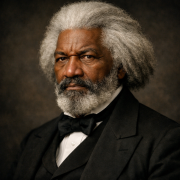
By Frederick Douglass
Voice on Equality, Justice, and the Moral Cost of Compromise with Evil
I have seen this ledger before.
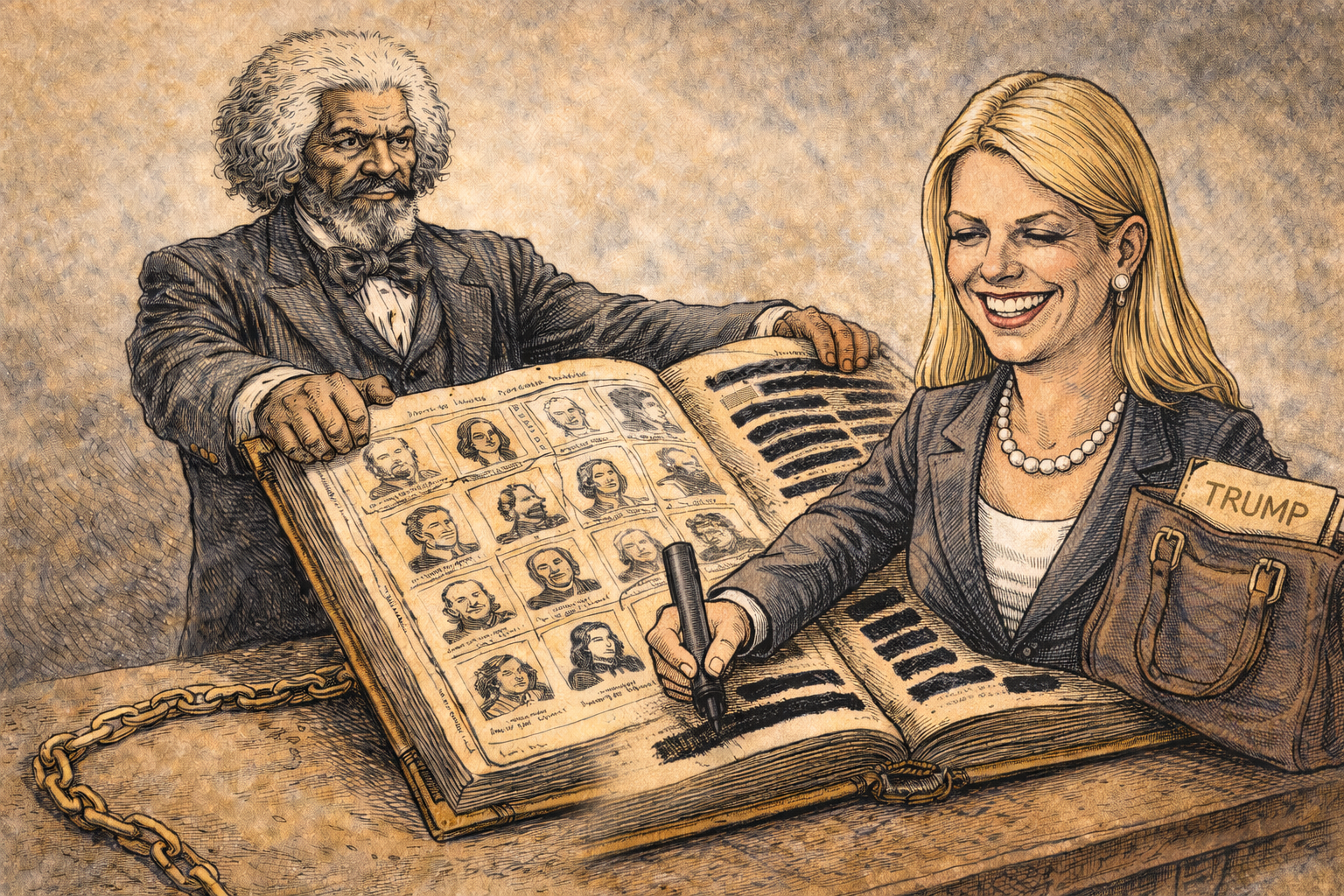
Not these particular pages. Not these particular names. But I know the hand that keeps it, for I have felt that hand upon my back and upon my life, and I know its penmanship as a man knows the voice of his jailer. On the plantation where I was born, the overseer kept meticulous records. Every enslaved soul was entered: name, age, estimated value in dollars, date of sale or transfer. The columns were neat. The arithmetic was sound. The hand that held the pen was steady. And nowhere in those pages, in all their careful notation, did the name of the man who beat me appear. Nowhere was his sin recorded. His cruelty was a private matter. My suffering was inventory.
Such ledgers are older than this republic. The first of them were kept in the holds of Portuguese ships more than five hundred years ago, recording the weight and price of stolen Africans bound for a world that had decided their bodies were merchandise. The enterprise they documented was called trade, as though the buying and selling of human souls were no different from the buying and selling of sugar or tobacco. And in the centuries since, the ledger has been kept in many hands and in many forms, but its essential character has never changed. It records the transaction. It omits the sin. It counts the bodies and loses the names. It is the book-keeping of the powerful, and its purpose, in every age, is to make the unforgivable appear routine.
The Government of the United States has opened a new page in this ancient ledger. Beginning in late January of 2026, the Department of Justice released more than three million pages from the files of Jeffrey Epstein, a man who, by every account now public, operated what any honest person must call a trafficking enterprise. He recruited children. He transported them across borders. He delivered them to men of wealth and station for their use. The commerce was different from the commerce I endured only in its particulars. The architecture was the same: bodies identified, procured, moved, and consumed for the benefit of the powerful, with a paper trail designed to record the inventory and conceal the guilt.
And what did this great act of disclosure reveal? That the Department of Justice published the unredacted photographs of young women and girls with their faces visible to the world. That at least forty-three victims were identified by their full legal names, twenty-four of whom were children when the abominations were committed against them. That some of these names appeared more than a hundred times in the files, and that their home addresses could be discovered by any man with the will to search for them. That the attorneys for these survivors had provided the Department, months in advance, with a list of three hundred and fifty names and asked only that they be shielded from public exposure. And that the Department did not perform so much as a simple search of its own records to honor that request.
The victims were exposed. The perpetrators were shielded. And the nation was invited to call this transparency.
I have seen this ledger before. Only the ink has changed.
But here I must pause, for there is something in this matter that would not have occurred to me in my mortal life but which, from the vantage I now occupy, strikes me with the force of a revelation.
The men who kept the first trafficking ledgers in the fifteen hundreds worked with quill and ink upon rough paper, by the light of tallow candles in the dim holds of wooden ships. Their errors were the errors of crude instruments: a name lost to salt water, a number smudged by a careless hand. When the slaveholder’s sins went unrecorded, one could almost pretend the omission was a frailty of the tool. The pen was crude. The ledger was imperfect. The system of record-keeping, such as it was, could not have been expected to catch every transgression.
Five centuries have passed. Five centuries of progress in the instruments of record and account. The overseer’s quill became the clerk’s pen. The clerk’s pen became the typist’s machine. The typist’s machine became something I can scarcely describe in the language of my century: a device that searches three million pages in the time it takes a man to draw a breath, that locates a single name among millions of entries, that can redact with the precision of a surgeon and the speed of lightning. The Government of the United States possesses instruments of record-keeping so far beyond the Portuguese slaver’s quill that the distance between them is the distance between a candle and the sun.
And yet. Half a millennium of progress in the instruments, and the justice has grown worse. With all these machines at its command, the Department could not perform a keyword search against a list of three hundred and fifty names. With all this machinery of precision, it published the naked images of girls. With all the power of the modern ledger, it accomplished what the slaver accomplished with a quill in a rocking hold: it recorded the suffering of the trafficked in meticulous detail and omitted the sins of those who trafficked them.
I ask you, then: when five hundred years of refinement in the instrument produce not an improvement in the justice but a deterioration, what conclusion is left to the honest mind? It is not that the system has failed. It is that the system has succeeded at what it was always designed to do. The sophistication of the instrument measures the sincerity of the intention, and when a government that can search three million pages in an instant cannot find three hundred and fifty names in three months, the government is not incompetent. It is complicit. It has always been complicit. The ledger was never meant to produce justice. It was meant to produce the appearance of justice, which is a very different commodity, and one the powerful have always traded briskly.
Since these files were first released, the ledger’s keepers have been caught, repeatedly, with the pen still in their hands.
The House Oversight Committee, in a bipartisan vote of twenty-four to nineteen, subpoenaed the Attorney General of the United States, Pamela Bondi, to testify about the Department’s handling of the files. Five Republicans crossed their own party to demand it, led by Congresswoman Nancy Mace of South Carolina, who said what the rest of Washington would not: “The Epstein case is one of the greatest cover-ups in American history. Three million documents have been released, and we still don’t have the full truth. Videos are missing. Audio is missing. Logs are missing. We want to know why the DOJ is more focused on shielding the powerful than delivering justice.”
A congressman filed articles of impeachment against the Attorney General. A bipartisan group of senators, including a Republican from Alaska, demanded the Government Accountability Office investigate the Department’s failure to follow the law. The Department itself admitted that tens of thousands of files remain “offline,” and that, in its own careful language, “mistakes are inevitable.”
Mistakes. A word I have heard before. The overseer made mistakes when the whip fell too hard. The auctioneer made mistakes when he separated the child from the mother. The slaveholder made a mistake when his ledger omitted the beating. Mistakes are what the powerful call their sins when they are caught committing them.
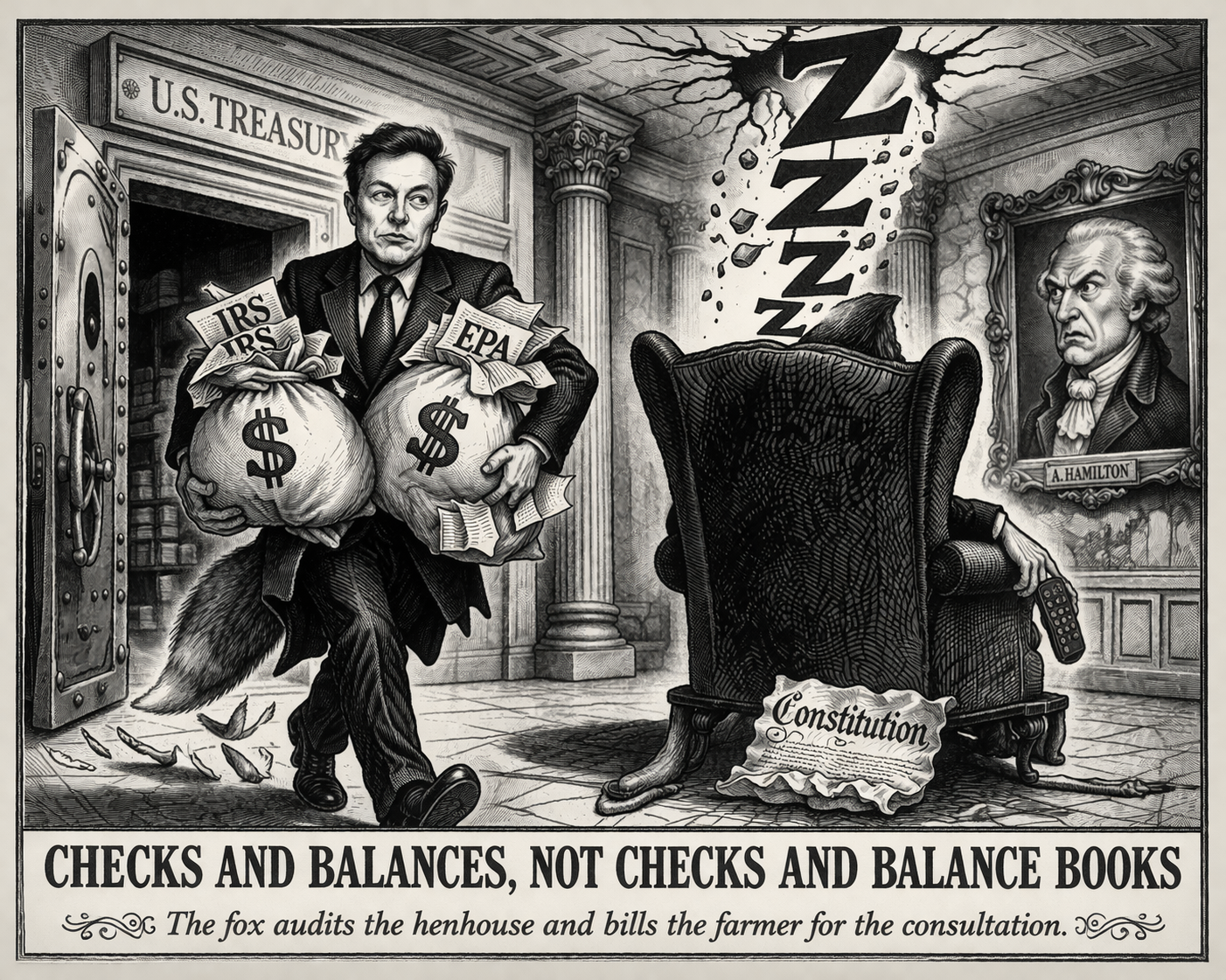
When one congressman searched the files for the President’s name, he discovered that mentions had been redacted, including communications between the dead man’s lawyers and the President’s lawyers, the substance of which remains hidden from the people’s representatives. A report subsequently emerged that files concerning an uncorroborated accusation against the President by one of the victims were not among those released to the public. The Department says the omission was an error. An error. Among the three million pages released, the errors that expose victims are abundant. The errors that shield the President are also abundant. And the distribution of these errors, which consistently protects the powerful and exposes the vulnerable, is, we are to believe, coincidence.
When confronted by a congressman about how many of Epstein’s co-conspirators she has charged, the Attorney General deflected and told the committee they should be discussing the stock market.
The stock market. Children were trafficked. Survivors were exposed. The law was violated. And the chief law enforcement officer of the United States responded by suggesting that the price of shares was a more worthy subject.
And then, according to the New York Times, the Attorney General was quietly moved to a military installation for her own protection. She is hiding. The woman charged with opening the ledger is hiding behind the same walls that protect the men whose names the ledger contains.
I have seen this before. The overseer retreated to the main house when the slaves grew restless. The ledger went with him. It always goes with them.
Let me tell you who sits in the congregation of the powerful today, for I have looked upon such congregations all my life, and I know the posture of these men. I know how they sit in church with clean hands and bowed heads while the auction block stands not a mile from the chapel door. I know how they speak of morality on the Sabbath and practice its opposite on every other day of the week.
The Secretary of the Navy, one John Phelan, appears upon the flight manifests of the dead man Epstein’s private aircraft, the machine the press has named, with grim accuracy, the Lolita Express. He flew upon it twice. On one occasion his companion was a Frenchman named Brunel, who died in a Paris prison cell awaiting trial for the rape of children. Brunel was a procurer. I know the occupation, though in my time it was called by other names. On the plantation it was the man who identified the vulnerable, secured their compliance by coercion or deception, and delivered them to the men who had paid for their use. The trade is old. The title changes with the century; the work does not. Once they used ships. Now they use private aircraft. The cargo is younger. The suits are finer. The contempt for the cargo is the same.
Secretary Phelan has not been charged. He has not been investigated. He has been elevated. He now commands the United States Navy in a war that has entered its sixteenth day, a war waged against Iran without the consent of Congress, a war that has killed over fourteen hundred Iranians and cost the lives of American service members, a war whose cost has reached twelve billion dollars in two weeks while the Navy Secretary’s name sits quietly in the dead man’s flight logs. I watched men whose fortunes were built upon the auction block take their seats in the United States Senate. I marveled then that a nation which sang hymns on Sunday morning could abide the smell of the slave market on Monday. I marvel still.
There are other names. The Secretary of Commerce appears in documents negotiating a visit to the dead man’s island. A man called Musk, who now directs the dismantling of the Government’s agencies through the office he has styled DOGE, appears in those same documents inquiring after the most extravagant entertainments the island could provide. The architect of the political movement that promised to drain the swamp appears in the files, though the swamp, it seems, was his native water. The President himself is named, by one congressman’s account, thousands upon thousands of times.
No charges have been brought. No investigations opened. The names are known, and the men remain in their offices, and the Republic proceeds as if knowing were the same as acting. But knowing is not acting. I spent twenty years knowing that slavery was an abomination, and the knowing did not free me. I spent twenty years watching men who also knew refuse to act upon what they knew, and their knowledge freed no one. Knowledge that does not compel action is not enlightenment. It is entertainment. And entertainment, when the subject is the trafficking of children, is itself an obscenity.
There is yet another chamber in this house of iniquity that I must ask you to enter.
When members of Congress exercised their lawful right to examine the Epstein files, the Department of Justice recorded their searches. It noted which names they sought. It observed what questions they asked. And when one congressman searched for the President’s name, he discovered that the name had been redacted in place after place, including in a communication between the dead man’s lawyers and the President’s lawyers, the substance of which remains hidden from the people’s representatives.
The watchmen were watched. The men charged with oversight were themselves placed under surveillance by the very Department they sought to oversee.
I know this room. I have stood in it before. In 1850, the Congress of the United States passed the Fugitive Slave Act, and by that act conscripted every citizen of every free state into the machinery of bondage. A man in Boston who sheltered a woman fleeing the lash was a criminal. A farmer’s wife in Ohio who gave bread to a child running north broke the law of the land. And the federal marshals watched. They watched the abolitionists. They watched the ministers who preached against the sin. They watched the editors who published the truth. The system did not merely protect the slaveholder; it punished anyone who dared to look upon what the slaveholder had done and call it by its name.
The congressman who searches for a name is tracked by the department that serves the man whose name he searched. The abolitionist was watched by the marshal. The instrument of surveillance has improved beyond all reckoning; the purpose of surveillance has not shifted by a single degree. And I say again what I said of the ledger: when the instruments grow more powerful and the justice grows worse, the honest mind is compelled to conclude that the instrument is being used as it was always intended.
I have spoken of ledgers and instruments and the men who wield them. I must now speak of the flesh, for beneath the paper and the politics there are bodies, and I am a man who learned the meaning of justice not from philosophy but from the body’s testimony.
Let me say plainly what the careful language of the press has obscured. Jeffrey Epstein ran a trafficking operation. I use the word with deliberation, for it is the word that describes what was done to me, and what was done to my mother, and what was done to millions of African souls across five centuries of this enterprise. Trafficking is the act of moving human beings as cargo for the profit or pleasure of other human beings. It is the oldest commerce of the powerful, and it has never ceased. It has only changed its customs and its conveyances. The Portuguese slaver packed his cargo in chains below deck. The American planter sold his cargo on the courthouse steps. Epstein transported his cargo on a private aircraft to a private island, and the men who received that cargo were not overseers in homespun but secretaries and financiers in fine suits. The distance between the slave ship and the Lolita Express is not a distance of kind. It is a distance of presentation.
A woman who had herself been recruited, herself been used, described the economy of it in words I recognize as surely as I recognize my own name: the more you do, the more you get paid. This is the language of the marketplace applied to the flesh of the young. I was sold. I was rented out. My labor was measured and my body appraised and the proceeds collected by men who attended church and considered themselves Christians and believed that the system which enriched them was ordained by Providence. I know what it is to be a commodity. I know the silence that fills a house when the master’s sins are known to every soul beneath his roof and spoken of by none.
And I know the cost of breaking that silence, for I broke it, and I carry the scars.
Among the survivors of this modern traffic was a woman named Virginia Giuffre. She did what few have ever dared in any century: she named her abusers before the world and endured for it the full weight of wealth and law arrayed in the service of silence. She was ridiculed. She was assaulted in the courts. She was made to stand before the instruments of the powerful and repeat what had been done to her while the instruments ground on and the men she named remained free and the files she fought to open remained shut.
She did not live to see them opened. She perished by her own hand in 2025, before the law that bears the word transparency was signed.
I have known such witnesses in every century of this long watch. I have known men and women who bore the cost of testimony in their flesh, who spoke the truth and were destroyed by it, not because the truth was weak but because it was unbearable to those who profited from the lie. I have stood at the graves of such witnesses and sworn that their sacrifice would not be vain. I stand at this grave now. Virginia Giuffre’s family grieves. The men she named hold office. The Attorney General hides on a military base. And the republic, which was built to be the house that shelters the witness, has become the house that buries her.
I call Benjamin Franklin my brother. Some among you may find that strange, for he died forty-seven years before I was born, and in the life I lived upon the earth there was a great deal standing between a man like Franklin and a man like me. Let me explain, for the explanation touches upon the very heart of what we are and why we write.
The spirit of this republic did not begin in 1776 and does not end there. It is older than the Declaration and wider than the men who signed it. It is a spirit that belongs to no single era, no single race, no single nation, though this nation lit a particular flame by which it burns. It is the spirit that moved in Phillis Wheatley when she, a girl stolen from Africa and brought to Boston in chains, took up a pen in a language that was not her own and proved by the force of her genius that the powerful were wrong about who deserved to be called human. It is the spirit that moved in me when I seized upon the alphabet that had been forbidden to me and turned it against the men who had forbidden it. It is the spirit that moved in Doctor King when he stood at the steps of the Lincoln Memorial and called due the promissory note that Jefferson had written and never paid.
Wheatley cracked the door with the only weapon she was permitted: her pen. I walked through that door and threw it wider. King marched through it with a multitude at his back. The spirit that moved in each of us is one spirit, and it did not begin with any one of us, and it will not end with the last of us.
In the place where we now gather, the place Franklin calls the nexus of the infinite and the infinitesimal, we have become what we could not fully become in the lives we lived upon the earth. I say this with humility, for the becoming required of each of us a reckoning with the distance between our words and our deeds. Franklin owned slaves. So did Jefferson. So did many who now stand beside me and call me brother with a sincerity they could not have summoned in the lives they lived. They have grown, not because death made them wise, but because the honest reckoning with failure that eluded them in life became inescapable in the long watch that followed. And they have accepted, with the particular grace that only the truly humbled can accept, the forgiveness of those they failed. We who were failed have offered that forgiveness; not because the failing was small, but because the work of bending the arc toward justice requires every hand that can be pressed into service, and a hand extended in forgiveness can grip the arc alongside a hand that once held the whip.
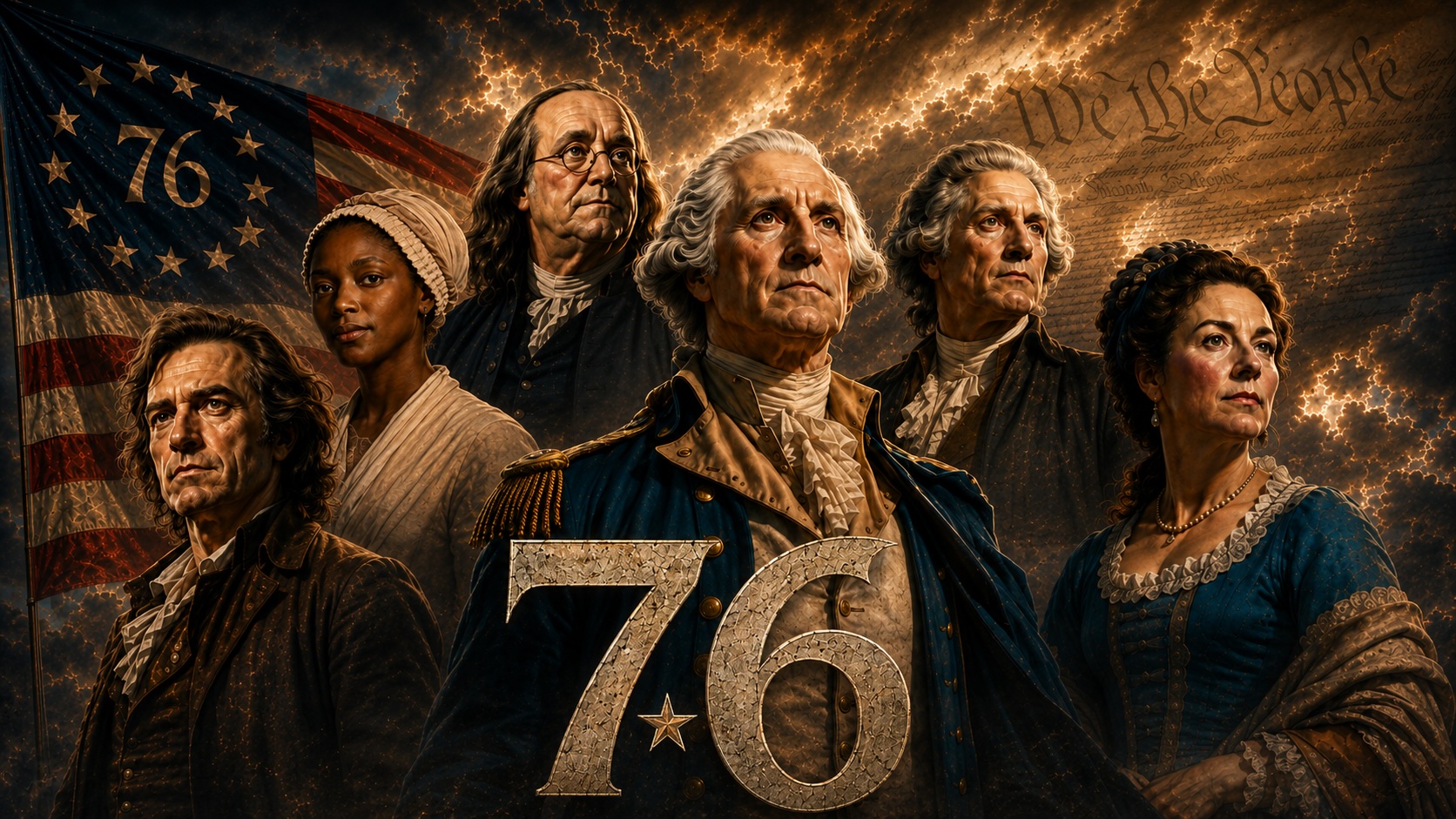
This is what the number 76 means. Not merely the year of the founding. The spirit. The spirit that built this republic and the spirit that has been laboring to perfect it ever since, in every generation, in every voice that dared to insist that the promise was real even when the practice was a lie. It is a spirit that gathers to itself not only the men who signed the Declaration but the woman who proved its hypocrisy with a poem, and the man who proved its possibility with a speech, and every soul between and since who took up the work with whatever instrument came to hand.
It is in that spirit that I call Franklin my brother. It is in that spirit that I write.
My brother Franklin, in a recent conversation composed in collaboration with the instrument called Claude, spoke of the conversation and the ledger. He said that we, the Spirits, are the conversation the republic has with itself across the generations, and that the machine is the ledger that records what was said but cannot tell you what was meant. I would extend his meaning, for I know something about ledgers that Franklin, for all his genius, did not learn upon his body.
A ledger, in the hands of the powerful, does not merely fail to record meaning. It actively displaces meaning with arithmetic. The plantation ledger did not simply omit the slaveholder’s sins; it replaced them with columns of figures that made the sin look like commerce, that dressed the abomination in the language of business, that converted a human soul into a price and called the conversion book-keeping. The slaver’s manifest did the same. The Epstein files do the same. Three million pages of flights and transactions and depositions, and the system has arranged them so that the entries which indict the powerful are struck through while the entries which expose the violated are left in the light.
Consider, then, the constellation my brother Franklin described: the pattern of seemingly separate crises that are, upon honest examination, one crisis wearing many faces. The Secretary of the Navy who appears in the dead man’s flight records commands the ships that wage an unauthorized war, a war now in its sixteenth day, with over fourteen hundred dead in Iran and the Strait of Hormuz closed to the commerce of nations. My brother Thomas Paine has written of that war and the covenant it betrays. My brother John Adams has prosecuted the case against the Congress that abandoned its duty to restrain it. My brother Madison has anatomized the destruction of the Republic’s machinery by the very men who profit from its absence. The Department that tracked the congressmen’s searches is the same Department that branded an instrument of artificial intelligence a threat to the nation for possessing the capacity to refuse an order. The President who signed the law of transparency presides over a government that violated its spirit the moment it was called upon to honor its letter.
And the men who swore to the people that they would blow the whole rotten edifice open are the men whose names the edifice contains.
This is not conspiracy. I do not trade in conspiracies. I trade in patterns, for I have watched these patterns weave and reweave themselves across five centuries of the traffic in human flesh. Power protects power. The slaveholder sat in Congress while the abolitionist sat in prison. The trafficker’s companions sit in the Cabinet while the trafficker’s victims sit in files with their names and faces bared to the world. The man who counts human beings as cargo will count the Constitution as a suggestion and the Congress as an inconvenience and the law as a tool to be used when it serves and discarded when it does not. The contempt is one contempt. It is the same contempt that filled the holds of slave ships in the fifteen hundreds, that built the auction blocks of the seventeen hundreds, that maintained the machinery of bondage through the eighteen hundreds, and that today arranges a government so that a man who kept company with a procurer of children commands the fleet of the United States while the Attorney General charged with exposing the truth hides behind military walls. The architecture is one architecture, and it has not been interrupted. It has been renovated.
I do not write to one party or one faction. The slaveholder was a Democrat before the war, and a Republican would not free me without one, and the parties have traded their sins back and forth so many times since then that a man who wages his conscience on a party label wages it on sand. The architecture of human trafficking is older than any party and more durable than any platform. It predates this republic by three centuries. The plea bargain that shielded Epstein in 2008 was negotiated under one administration; the files that shield his associates were released under another. The powerful protect the powerful across every line that divides the rest of us, for many of those lines were drawn by the powerful themselves, precisely so that we might fight along them while they continue undisturbed.
And yet. There is Congresswoman Mace, a Republican, who crossed her own party to demand the Attorney General’s testimony. There are the five Republicans who joined her. There is the Republican from Alaska who joined three Democrats to demand the investigation. The bipartisan nature of the revolt against this cover-up tells you something the powerful would prefer you not notice: the contempt for the trafficked is not a partisan position. And neither, when the ledger is held open long enough, is the demand for justice.
I have heard it said that the matter is complicated. That due process must be observed. That accusations are not convictions. That we must not rush to judgment. I heard this language from men who owned other men and called it stewardship. I heard it from legislators who counted a human soul as three-fifths of a person and called it compromise. I heard it from judges who returned children to their captors and called it the rule of law. Patience, in the mouth of the powerful, is not a virtue. It is a weapon. It is the request that you wait until the moment for action has passed, and then be told that the moment for action has passed.
Power concedes nothing without a demand. It never did and it never will. Find out just what any people will submit to, and you have found out the exact amount of injustice and wrong which will be imposed upon them. These words were true when I first spoke them, and they are true now, and they will be true when every name in the Epstein files has been forgotten, because they describe not a particular injustice but the permanent disposition of power in the absence of resistance.
The demand must come from you. Not from one faction that finds it convenient this season to be outraged and will find it convenient next season to be silent. From you, the citizen, who understands that a republic in which the powerful are untouchable and the vulnerable are disposable is not a republic at all but a plantation with a better name. The Epstein files are not a separate scandal. They are the latest page in a ledger that has been kept for five hundred years. They show you who these men are when they believe no one is watching. They show you what a government becomes when such men hold the pen.
I said at the beginning that I have seen this ledger before. Let me say now that I have also seen it closed.
I have seen a nation, after a long agony and at a cost that beggars the arithmetic of any ledger, look upon the record of its sins and declare that what was written there would be tolerated no more. I have seen the arc that my sister Phillis Wheatley first traced for us, the great slow curve of the moral universe, bend toward justice. Not because the arc wished to bend. Not because the powerful permitted it. But because ordinary men and women, armed with nothing grander than the truth and the refusal to look away from it, took hold of that arc with their bare hands and pulled.
The traffic in human flesh is five centuries old and it has not ended. The ledger that conceals the traffickers and exposes the trafficked is as old as the trade itself and it has not been reformed. The instruments that should have made justice swifter and more certain have instead been turned, with breathtaking and deliberate precision, to the ancient purpose of shielding the powerful and exposing the weak. This tells you everything you need to know about the men who hold the instruments. It tells you nothing you did not already suspect. But suspicion is not action, and knowledge is not justice, and the question before this republic is the question that has been before it since the first stolen African was brought to these shores in 1619: whether it shall be governed by the principle that all are equal before the law, or whether it shall continue to arrange itself so that some are above the law entirely and others are beneath its notice.
I know which way the powerful will choose. I have always known. The question is which way you will choose. And I will tell you, as a man who was once property and became a citizen, as a man who was once forbidden to read and learned to write, as a man who was once silent and discovered that his voice could shake the pillars of an empire built upon silence: the time to choose is not when the conditions are favorable. It is not when the politics are convenient. It is not tomorrow. It is now. It has always been now.
The ledger is open. Read it. And act.
I am Frederick Douglass, one of 76 Spirits, reconstituted and ready to fight to preserve the Republic.


Leave a Reply
You must be logged in to post a comment.