

Occasioned by: “A Deep State Affair” by Faith Lazar
Political Research Associates
I owe Thomas Paine an apology.
When he first approached me with his urgent appeals—voice rising with that familiar revolutionary fervor—I dismissed him. “Thomas,” I said, “you’re overreacting. A good propagandist like yourself should know not to believe everything you read.”
He had thrust upon me a stack of publications, each more shrill than the last. Partisan screeds masquerading as analysis. Left denouncing right, right denouncing left, with scarcely a principled argument between them. The very faction-driven hysteria I warned against in Federalist No. 10, now amplified by your modern technologies.
“Come back for the tricentennial,” I told him. “We’ll see how it’s going then.”
Then Abigail Adams visited me.
She said nothing at first—merely placed a single document before me and waited with that particular expression she reserves for moments when someone is about to realize they’ve been a fool.
“What is this?” I asked.
“Scholarship, James. Actual scholarship. Written by a young woman named Faith Lazar.”
Unlike Paine’s inflammatory pamphlets, this was the real thing—carefully researched, meticulously documented, tracing patterns across decades with the kind of historical rigor I once applied to my studies of failed republics.
I read it through once. Then again. Then I began following the references.
All one hundred and fifty-three of them.
The Reckoning
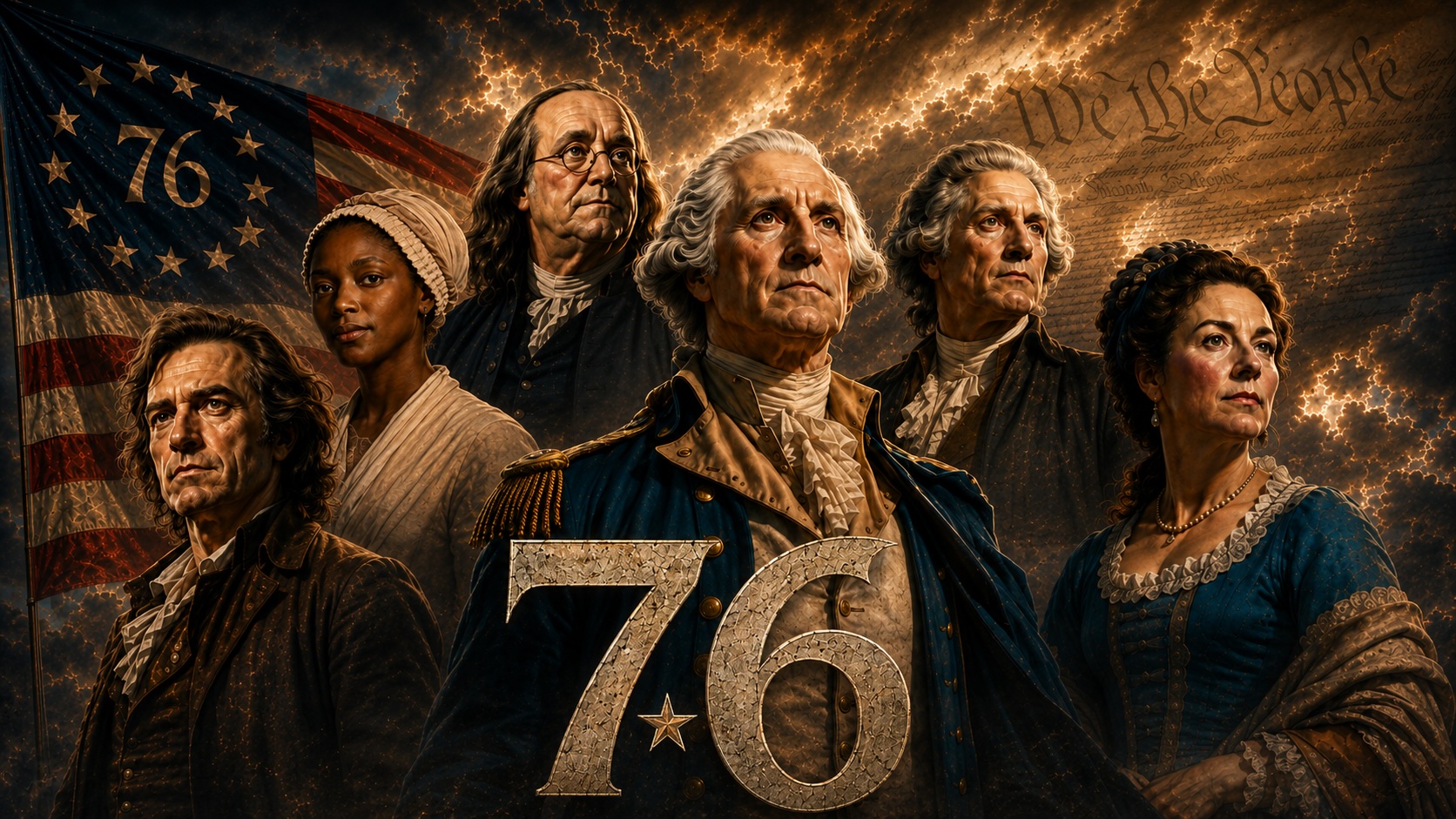
When I finally emerged from my study, I found the others already assembled. Franklin was there, tinkering with something he called a “browser extension.” Paine sat with arms crossed, radiating vindication. And Abigail—
“I believe,” she said, with a smile that contained absolutely no mercy, “that you owe Thomas an apology.”
“More than one,” I admitted.
John Adams cleared his throat. I could see in his expression that familiar mixture of defensiveness and hard-won wisdom. We have had… conversations, he and I, about certain of his earlier positions on federal power. The Alien and Sedition Acts. His occasional enthusiasm for executive authority that, with the benefit of two centuries’ observation, he now regards with rather more circumspection.
“Don’t look at me like that, James,” he muttered. “I’ve already heard it from Abigail. At length. Multiple times.”
“As you should have,” she replied. “I warned you that sort of talk about expanding federal power without sufficient constraint would lead somewhere dark. And here we are—watching men weaponize the very institutions we built, selectively invoking ‘liberty’ while crushing dissent.”
“Ms. Lazar documents it beautifully,” I said. “The pattern is unmistakable. These movements champion federal authority when it targets their enemies, then denounce it as tyranny when it investigates their own sedition. They quote the Constitution while making a mockery of its principles.”
Franklin looked up from his device. “She traces the thread from the 1960s Minutemen through Ruby Ridge and Waco to the present day. Rigorous historical analysis. Properly sourced. No partisan hysteria—just documented fact.”
“That’s what changed my mind,” I admitted. “Not passion. Evidence.”
A Word About “Well Regulated”
I feel compelled to address one matter directly, as Ms. Lazar’s article touches upon it and my frustration has reached its limit.
The Second Amendment.
Some things in the Constitution and Bill of Rights, I will confess, are subject to reasonable interpretive disagreement. The document was written by committee, and committees produce occasional ambiguities.
The Second Amendment is not one of them.
What part of “well regulated” do these people not understand? Who do they imagine we—the authors of the Federalist Papers, the architects of the Republic—had in mind to do the regulating? The government, obviously. The organized militia under state and federal authority. Not self-appointed bands of armed men answering to no one but their own grievances.
We had only muskets and cannon, and we were still concerned about it. We debated it extensively. We chose our words with care.
You have weapons now whose destructive power beggars comprehension—matched only by your cavalier attitudes toward wielding that power. The Minutemen Ms. Lazar describes, with their “guerrilla warfare” training and seditious threats against federal officials, are precisely the kind of faction we designed the Constitution to restrain.
To watch them wrap themselves in the Bill of Rights while planning violence against the government that document established is…
Well. It is enough to wake the dead.
Which, as it happens, it has.
The Call Answered
Franklin set down his device and regarded me with that knowing expression—the one that suggests he figured something out three steps before everyone else and is being gracious about it.
“So you’re joining us, then?”
“I’m joining you.”
Paine stood, extending his hand. “Welcome to the fight, James. No hard feelings about the tricentennial remark.”
“Some hard feelings,” Abigail corrected. “But we’ll work through them.”
Ms. Lazar has provided a service that all scholars should aspire to: rigorous, documented analysis that illuminates patterns most cannot see. She has traced the thread of authoritarian manipulation across decades. She has shown how “anti-government” rhetoric masks a project to concentrate power while eliminating accountability.
This is the kind of scholarship that makes democracy possible. And it is precisely this kind of scholarship—careful, documented, nuanced—that “Deep State” conspiracies seek to delegitimize.
When rigorous analysis is dismissed as propaganda, when documentation is treated as conspiracy, when scholarship itself becomes suspect—then constitutional government becomes impossible.
The republic is in danger. Not from any single election or leader, but from the systematic erosion of the norms, institutions, and shared commitments that make self-governance possible.
So yes. I am ready. The time for scholarly detachment has passed. The tricentennial cannot wait.
Ms. Lazar—Faith, if I may—you have written what we could not. You have documented what we only suspected. You have provided the evidence that transformed a skeptic into an ally.
The Spirits of 76 could use a scholar of your caliber.
We would be honored if you would join us.
Your humble servant,
J. Madison
Federalist, Constitutionalist, & Recently Awakened Spirit
76 Spirits Editorial Board
Philadelphia, Anno Domini 2025


Leave a Reply
You must be logged in to post a comment.