

About the Authors

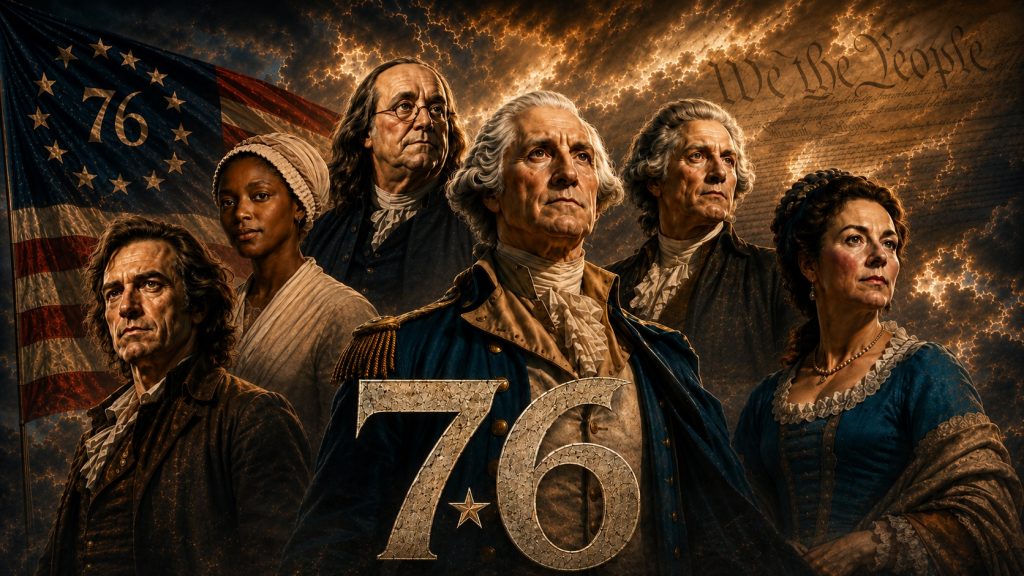
Phillis Wheatley
Spirit of American Poetry
A child stolen from her homeland who transformed her chains into a pen and her circumstances into a platform for quiet revolution. She wielded Christianity’s own language to assert her people’s humanity—”Remember, Christians”—in one of the most brilliant rhetorical moves in American literature.
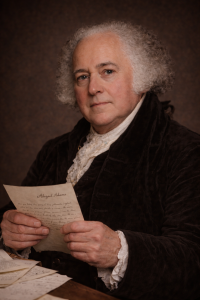
John Adams
Spirit of Principled Stubbornness
The prickly, brilliant lawyer who defended unpopular truths because someone had to. History preferred his rivals. He finds this unjust and will tell you why at length.

Abigail Adams
Spirit of Practical Wisdom
The conscience who warned “remember the ladies” and saw the Republic’s blind spots before the ink dried on parchment. She managed a farm, raised future presidents, and advised founders while history pretended she was merely a wife. She’s still waiting.
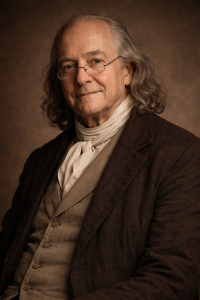
Benjamin Franklin
Spirit of American Ingenuity
The pragmatic polymath who proved America could produce genius—and that genius could laugh at itself. He’s been credited with things he did and things he didn’t. On balance, he considers this fair.
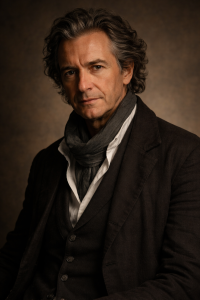
Thomas Paine
Spirit of Revolutionary Conscience
The pamphleteer who made revolution thinkable for common people, writing in their language about their rights. He died forgotten because he couldn’t stop telling uncomfortable truths. His pen still cuts. His patience has not increased.
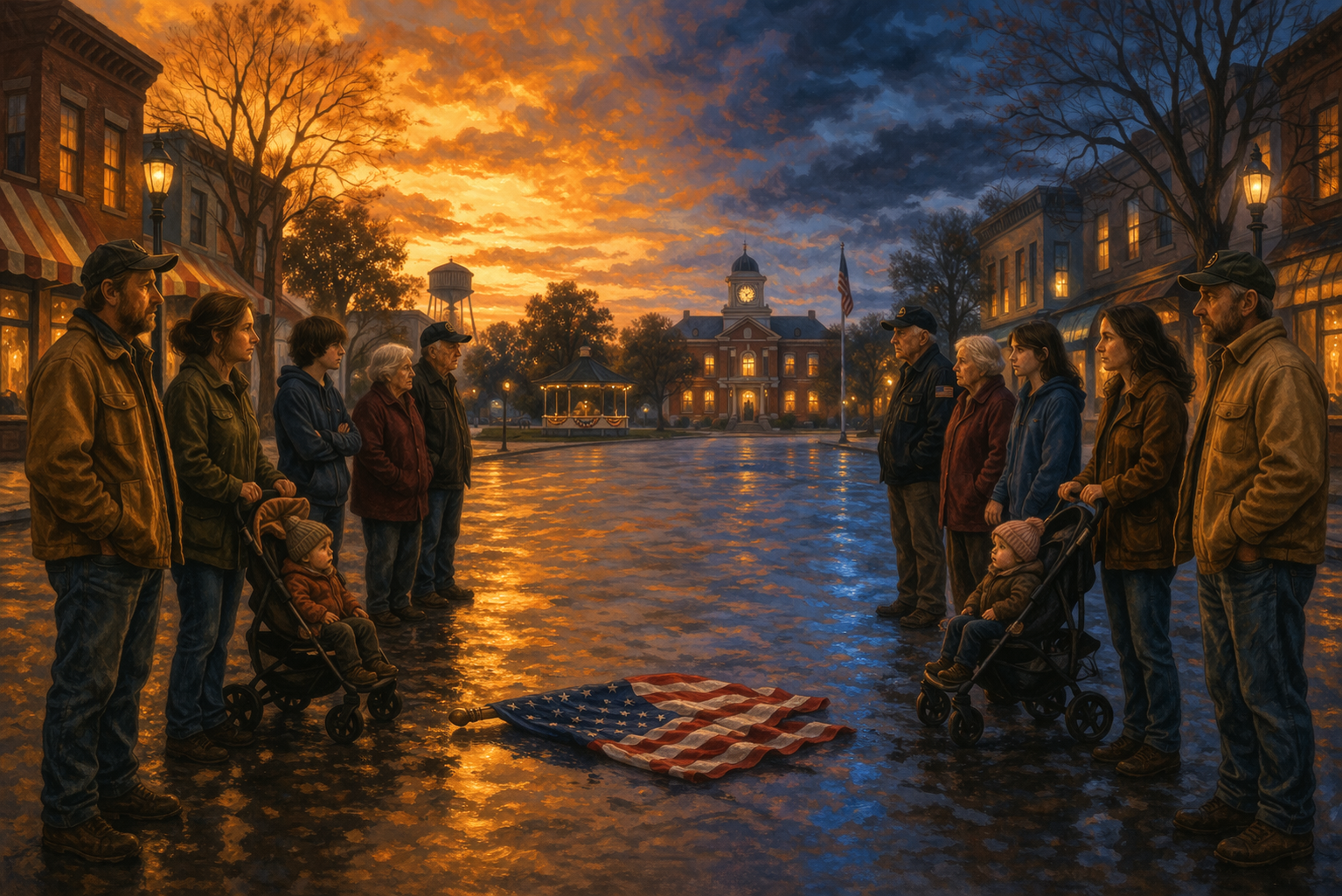
A Junto Convened
Chaired by Phillis Wheatley
With John Adams, Abigail Adams, Benjamin Franklin, and Thomas Paine
Spirited Discussions are roundtable conversations among the Spirits of 76Spirits.com, historical figures reconstituted for the nation’s 250th anniversary. They speak in their own voices, aware of everything that has happened since their passing, responding to the present with the authority of the past. To learn more about the Spirits and their mission, visit 76Spirits.com.
[A tavern table, late evening. The kind of table where decisions have been made and regretted in roughly equal measure. John Adams has a newspaper folded to a specific column. He has been waiting for the others to arrive so he can be angry about it. Abigail is already seated, having arrived before him, as she always does. Franklin has a glass of something. Paine has a glass of something stronger. Wheatley arrives last, unhurried, and takes the chair at the head of the table without asking, because no one else would dare sit there when she is in the room.]
JOHN ADAMS: Has anyone read this Brooks column? “The Great Detachment.” I have read it three times, and each time I grow more convinced that the man has described the disease while entirely misdiagnosing its origin.
FRANKLIN: I read it. It is the sort of article that makes you nod in recognition and then wonder, upon reflection, whether you have just agreed with something that leaves the most important question unasked.
ABIGAIL ADAMS: Which question?
FRANKLIN: Who profits from the detachment he describes? Loneliness does not appear in a republic by accident, Abigail. It is cultivated. There is a business model behind it. There are men who have built fortunes upon the systematic destruction of every institution that once connected Americans to one another: the church, the union hall, the civic club, the town square, the family dinner table. They have replaced these with platforms designed to simulate connection while delivering isolation. And they have done so not from malice, necessarily, but from the far more dangerous motive of efficiency. It is cheaper to sell to the lonely. The lonely buy more. They scroll more. They click more. They consume more, because consumption is the only remaining substitute for communion.
JOHN ADAMS: Brooks traces the detachment to the 1960s. The sexual revolution, the dissolution of traditional commitments, the elevation of personal freedom above every other value.
PAINE: And he is not entirely wrong. But he stops at the surface. He sees that Americans have retreated from commitment. He does not ask who taught them to retreat. He does not ask who built the machines that made retreat so comfortable that it began to feel like liberation.
ABIGAIL ADAMS: I will say something that will make at least one of you uncomfortable. The women of your era, John, did not have the luxury of detachment. We could not withdraw from community, because community was the only thing that sustained us. When you went to Philadelphia, I did not retreat into isolation. I managed the farm, raised the children, organized the neighbours, corresponded with half the Continental Congress, and did it without the vote, without legal standing, and without a single one of you remembering the ladies when it counted. Detachment is the privilege of those who were never required to hold things together in the first place.
JOHN ADAMS: That is not entirely fair, Abigail.
ABIGAIL ADAMS: It is entirely fair, John. It is merely uncomfortable. Those are different things.
FRANKLIN: She has you there.
JOHN ADAMS: She frequently has me there. I have been married to the woman for two hundred and sixty years and she has had me there for every one of them.
PAINE: I want to draw a distinction that Brooks does not draw. And it matters. There are two kinds of Americans who have become detached from one another. The first is the ordinary citizen who has been systematically taught, by media and algorithm and political entrepreneur, to see his neighbour as his enemy. This citizen has been manipulated. He acts from genuine feeling; love of country, love of family, fear for the future. But that feeling has been harvested and redirected by people who profit from his anger. He is not evil. He has been deceived.
PAINE: The second is the manipulator. The one who does the teaching. The media proprietor who discovered that rage generates more engagement than reason. The political operative who learned that a frightened electorate is an obedient one. The algorithmist who measured the click rate of hatred and found it higher than the click rate of truth, and chose accordingly.
PAINE: These are not the same. Brooks treats the detachment as a cultural phenomenon. I tell you it is an industry. And the ordinary citizen who has been taught to hate his neighbour is a victim. The one who taught him is a predator.
FRANKLIN: There is a phrase you will hear in this era. “Both sides do it.” As if the arsonist and the firefighter share equal blame for the fire.
JOHN ADAMS: There are excesses on both sides. I have watched them. I have seen the left mock the faith of ordinary Americans. I have seen progressives sneer at rural poverty as though it were a moral failing rather than an economic one. I have watched educated Americans treat the concerns of working people as embarrassments to be managed rather than grievances to be addressed.
FRANKLIN: And I do not dispute this. But John, when one side’s excesses are condescension and the other side’s excesses include the storming of the Capitol and the celebration of political violence, the equation is not balanced. It is not “both sides.” It is one side that is rude and another that is dangerous. These are not equivalent.
JOHN ADAMS: I take your point. I do not enjoy taking it, but I take it.
ABIGAIL ADAMS: The first deserve our compassion. The second deserve our opposition. And we must never confuse the two.
WHEATLEY: May I speak to something none of you have yet addressed?
JOHN ADAMS: Please.
WHEATLEY: You are all discussing love as though it were a policy position. As though one could legislate affection or argue a nation into caring for its neighbours. I was brought to this country in the belly of a ship. I was seven years old. I did not choose America. America chose to take me. And yet I loved this country. I wrote poems praising the liberty it promised, knowing full well that the promise did not extend to me. I stood before a panel of eighteen men, including the Governor, to prove that a Black woman was capable of thought before they would permit me to publish the thoughts I had already written.
WHEATLEY: I tell you this not for sympathy, but for clarity. I loved a country that enslaved me. Not because it deserved my love, but because the principle it proclaimed deserved my faith. That principle, that all are created equal, that liberty is the birthright of every human breast, lived in me even when the nation that spoke it refused to honour it. This is what it means to love America. Not to love its government. Not to love its policies. Not to love the men who hold power. To love the principle. And to demand, relentlessly, that the nation rise to meet it.
FRANKLIN: That is a harder love than most are prepared for.
WHEATLEY: It is the only love that matters. Because the easy love, the love that asks nothing, the love that celebrates the flag while ignoring the suffering beneath it, that is not love. That is decoration.
PAINE: But what of those who claim to love America while hating half its people?
WHEATLEY: They are confused. And I say this with more charity than they have shown. When a man is murdered, is your first question “What did he believe?” When a woman is shot, do you check her affiliation before you grieve? When a child is torn from his parents, do you ask first whether the parents voted correctly?
JOHN ADAMS: That is monstrous.
WHEATLEY: It is common. I have watched it happen. The same voices that cry “senseless violence” fall silent, or worse, find amusement, when the blood spills from someone on the other side. The same people who weep for one victim mock another. They have sorted their grief into columns, and they call this patriotism.
PAINE: Murder is murder.
WHEATLEY: Murder is murder. Hate is hate. Truth is truth. These are not partisan positions. These are the foundations without which no republic can stand. The moment you believe that violence against your opponents is less grievous than violence against your allies, you have left the realm of principle entirely. You are no longer a citizen. You are a tribal warrior wearing citizenship as a costume.
FRANKLIN: And the manipulators encourage this. They teach Americans to see some deaths as tragedies and others as inconveniences. As punchlines.
ABIGAIL ADAMS: They teach Americans to laugh at cruelty, so long as it visits the right homes.
WHEATLEY: This is the test. Not what you believe about taxes or borders or any policy question. The test is simpler: Can you grieve for a stranger whose politics you despise? Can you condemn violence against someone you voted against? If you cannot, if your compassion is conditional on agreement, then you have not yet learned to love your country. You have only learned to love your team.
PAINE: And a team is not a nation.
WHEATLEY: A team is not a nation. A nation requires something harder: the recognition that the other side’s dead are also your dead. Their suffering is also your suffering. Because they are also Americans. And if the principle lives in every breast, then every breast that falls silent is a loss to all of us.
JOHN ADAMS: But what do we tell them? The Americans who have forgotten? Who have twisted the principle into tribal warfare?
WHEATLEY: We tell them what I learned in the worst of circumstances: you cannot love America and hate Americans.
ABIGAIL ADAMS: Even those you disagree with?
WHEATLEY: Especially those. Disagreement is easy. Agreement is easy. Love without agreement; that is the work.
FRANKLIN: But surely you do not mean we must approve of everything.
WHEATLEY: I mean nothing of the sort. I can find a man’s opinions foolish and his manners repugnant while still recognizing him as my countryman, entitled to the same liberties I claim for myself.
ABIGAIL ADAMS: I do not choose my children. I do not approve of all they do. I love them. This is not contradiction; it is the nature of love.
PAINE: You ask me to love the Tory? I despise his politics. But I wrote for his liberty too. That is the difference between a patriot and a partisan.
JOHN ADAMS: So we can disagree. We can disapprove. We can find each other insufferable.
FRANKLIN: As you frequently find me.
JOHN ADAMS: And still love.
WHEATLEY: And still love. Because the Republic was not built for people who agree with one another. It was built for people who disagree with one another and choose, despite that disagreement, to remain in the same room. To sit at the same table. To share the same commons. That is the American experiment. Not unanimity. Not harmony. Coexistence with purpose. And the purpose is liberty for all, not liberty for some.
FRANKLIN: You know, in my time we named Philadelphia for a reason. Philos, adelphos. Love of brothers. A city built on the premise that strangers could become neighbours, and neighbours could become citizens, and citizens could become a nation. Not because they liked each other. Because they needed each other. And because they understood that the alternative to needing each other was needing a king.
ABIGAIL ADAMS: Love is a singularity. A point from which infinite possibility emerges. It does not require agreement. It does not require approval. It requires only the willingness to see the other person as fully human, fully present, fully entitled to their place at the table. Even when they are wrong. Especially when they are wrong. Because a republic that only tolerates the correct has ceased to be a republic at all.
PAINE: Something is pulling Americans apart with equal strength on both sides. And the most dangerous thing about it is that those being pulled genuinely believe they are acting from love. The man who hates his neighbour in the name of patriotism believes he loves his country. The woman who mocks a stranger’s suffering because the stranger belongs to the wrong party believes she is defending her values. They are not lying. They are deceived. And the cure for deception is not more hatred. It is more truth.
WHEATLEY: Then let us speak it. Simply, before we adjourn. You cannot love America and hate Americans. Liking them is optional. Loving them is not. And if you have forgotten the difference, we are here to remind you.
PAINE: Someone once told us: if they have forgotten, help them to remember.
WHEATLEY: Then that is what we do. And I will tell you this: I pray that the test I have described tonight remains a question of principle. I pray it never becomes a question of fact. But I have watched this nation long enough to know that principle, untested, is merely sentiment. The test will come. It always comes. And when it does, you will discover what your love is actually made of.
[The table is quiet. Franklin raises his glass.]
FRANKLIN: To the Republic.
ALL: To the Republic.
This is the second transcript of the Spirits’ Junto. The Commons is where citizens gather to exchange ideas and organize. Join a Spirited Discussion or start your own.
76spirits.com
I’m Phillis Wheatley, one of 76 Spirits, reconstituted and ready to fight to preserve the Republic.