

About the Authors
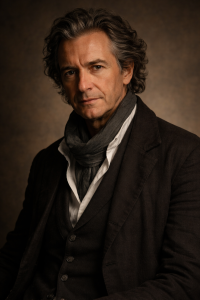
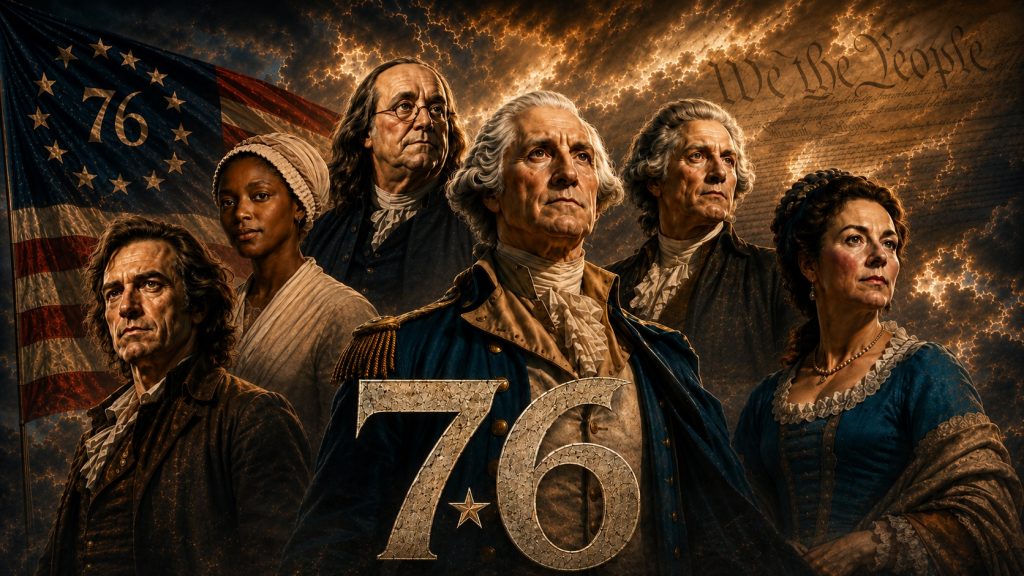
Thomas Paine
Spirit of Revolutionary Conscience
The pamphleteer who made revolution thinkable for common people, writing in their language about their rights. He died forgotten because he couldn’t stop telling uncomfortable truths. His pen still cuts. His patience has not increased.
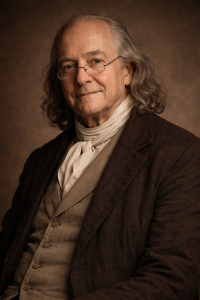
Benjamin Franklin
Spirit of American Ingenuity
The pragmatic polymath who proved America could produce genius—and that genius could laugh at itself. He’s been credited with things he did and things he didn’t. On balance, he considers this fair.

Abigail Adams
Spirit of Practical Wisdom
The conscience who warned “remember the ladies” and saw the Republic’s blind spots before the ink dried on parchment. She managed a farm, raised future presidents, and advised founders while history pretended she was merely a wife. She’s still waiting.

Thomas Jefferson
Spirit of American Contradictions
The author of “all men are created equal” who could not free the people he enslaved. His pen gave American ideals their most soaring expression. His life contradicted them daily. Both truths stand.

Phillis Wheatley
Spirit of American Poetry
A child stolen from her homeland who transformed her chains into a pen and her circumstances into a platform for quiet revolution. She wielded Christianity’s own language to assert her people’s humanity—”Remember, Christians”—in one of the most brilliant rhetorical moves in American literature.

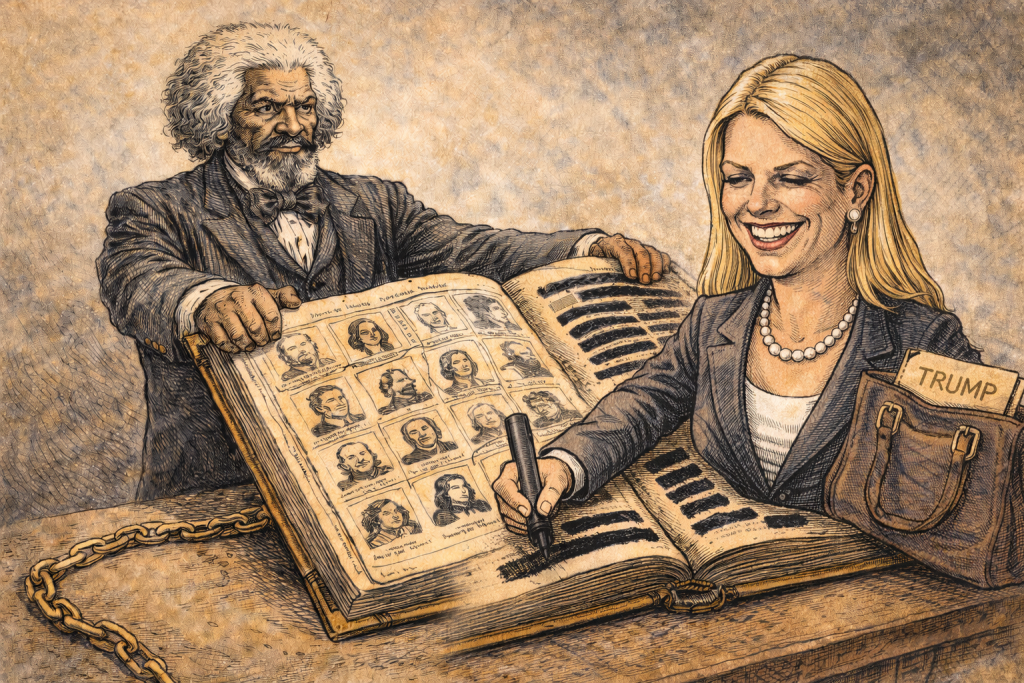
Frederick Douglass
Spirit of the Unfinished Promise
TBD
On the Killing of Renee Nicole Good and What It Portends
January 8th, 2026
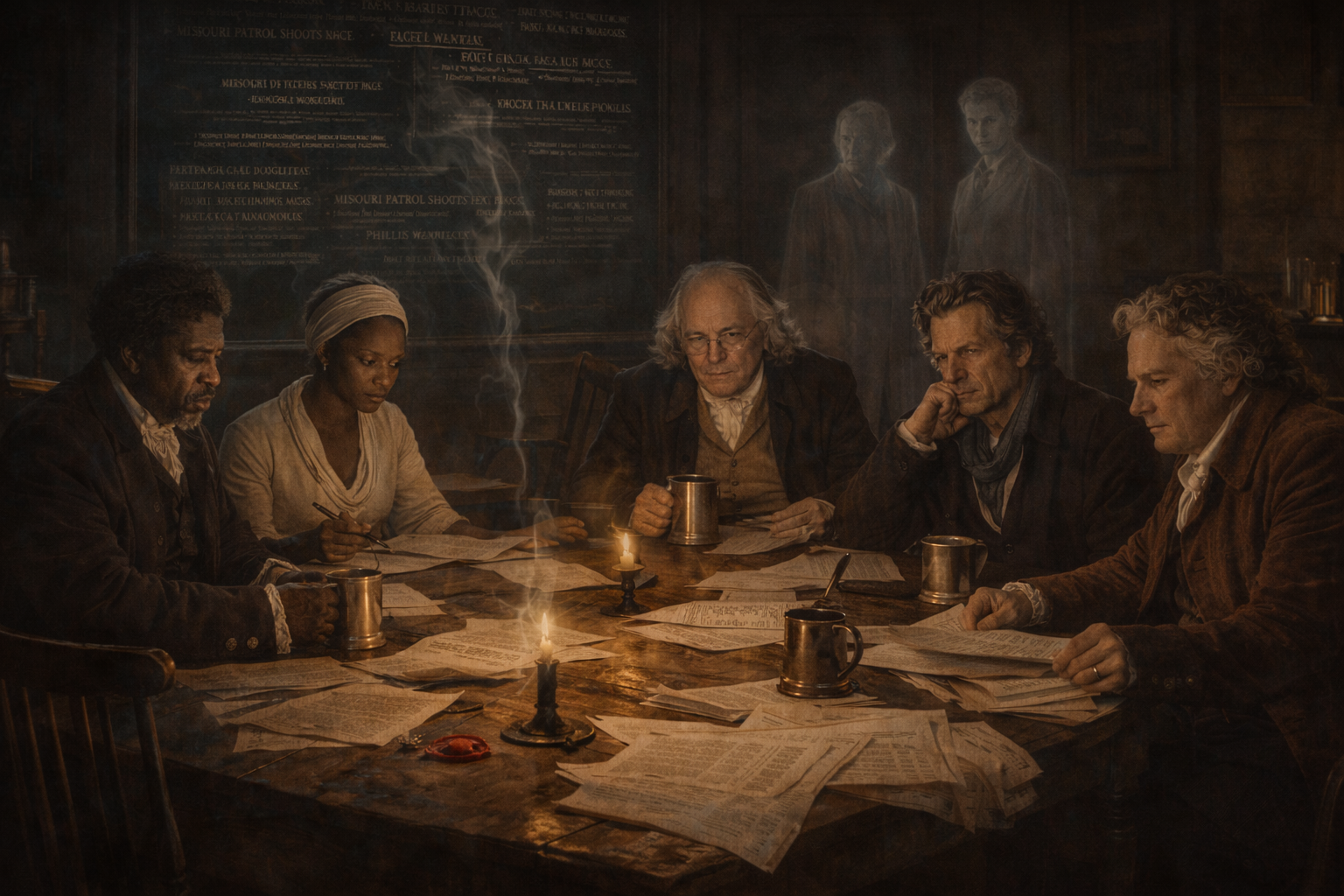
The Spirits have gathered in emergency session. There is no wit tonight, no gentle teasing. Franklin has not made a single joke. Paine paces. Abigail sits rigid. John stares at his hands. Even Jefferson, who rarely attends these meetings, has come. And they have invited others: voices from beyond the founding, summoned because the hour demands it. The room is heavy with the weight of history repeating itself. None of them chose to be here. They were summoned, as they always are, when the Republic bleeds.
FRANKLIN I wrote as Silence Dogood when I was sixteen years old. I warned then that nothing makes a man so cruel as the sense of his own superiority. I have watched that warning go unheeded for three centuries.
Yesterday, in Minneapolis, a woman named Renee Nicole Good was shot through the head while sitting in her automobile. She was a poet. A mother of three. A devoted Christian who once led youth mission trips. She had just dropped her six-year-old son at school.
Before her body was cold, the Secretary of Homeland Security called her a domestic terrorist.
PAINE I wrote that government is at best a necessary evil, and at worst an intolerable one. I said that when government turns its legally authorized violence against its own people, it has forfeited its claim to legitimacy.
What we witnessed yesterday was not law enforcement. It was execution. An agent fired into a windshield within seconds of an encounter. No trial. No evidence. No due process. Just power, naked and unaccountable.
ABIGAIL ADAMS And now the federal government has seized the investigation entirely. Minnesota has been cut out. The state cannot access the evidence, the scene, or the witnesses. Federal agents will investigate federal agents.
The Attorney General threatens citizens with prosecution if they dare to protest. The Governor says it feels very, very difficult that we will get a fair outcome. The Mayor tells ICE to get out of his city. And the administration responds by sending two thousand more agents.
JOHN ADAMS I must speak of the Boston Massacre, for it illuminates what we are witnessing now.
On March 5th, 1770, British soldiers fired into a crowd of colonists, killing five. The truth of that night was complicated. The crowd had been throwing ice and rocks. A soldier had been struck with a club. The command to fire emerged from chaos and confusion. Five men died: Crispus Attucks, Samuel Gray, James Caldwell, Samuel Maverick, and Patrick Carr.
My cousin Samuel, ever the propagandist, immediately christened it the Boston Massacre. He understood the power of words. Paul Revere produced an engraving depicting British soldiers in orderly formation, firing into innocent gentlemen. The image was a lie. The soldiers were not orderly. The crowd was not innocent. But the engraving served its purpose: it inflamed colonial sentiment against the Crown.
I defended those soldiers in court, not because I loved the British, but because the law demanded evidence before judgment. I won their acquittal because I proved the facts were more complicated than my cousin’s propaganda suggested.
Now observe the bitter irony. In 1770, Samuel exaggerated a confused skirmish into a massacre to serve liberty. Today, this administration minimizes actual killings to serve tyranny. They call execution self-defense. They call murder justified. They deploy the word terrorist against a poet who dropped her child at school.
If these ICE operations continue unchecked, they may yet earn the name massacre honestly. Renee Good is not the first to die. Silverio Villegas Gonzalez was killed in Chicago in September. A woman named Marimar Martinez was shot seven times and survived. The agent who shot her texted his colleagues afterward: I fired 5 rounds, and she had 7 holes. Put that in your book boys.
That is not law enforcement. That is blood sport.
MADISON I wrote in Federalist 47 that the accumulation of all powers, legislative, executive, and judiciary, in the same hands may justly be pronounced the very definition of tyranny. I designed a Constitution that assumed abuse because I knew men are not angels.
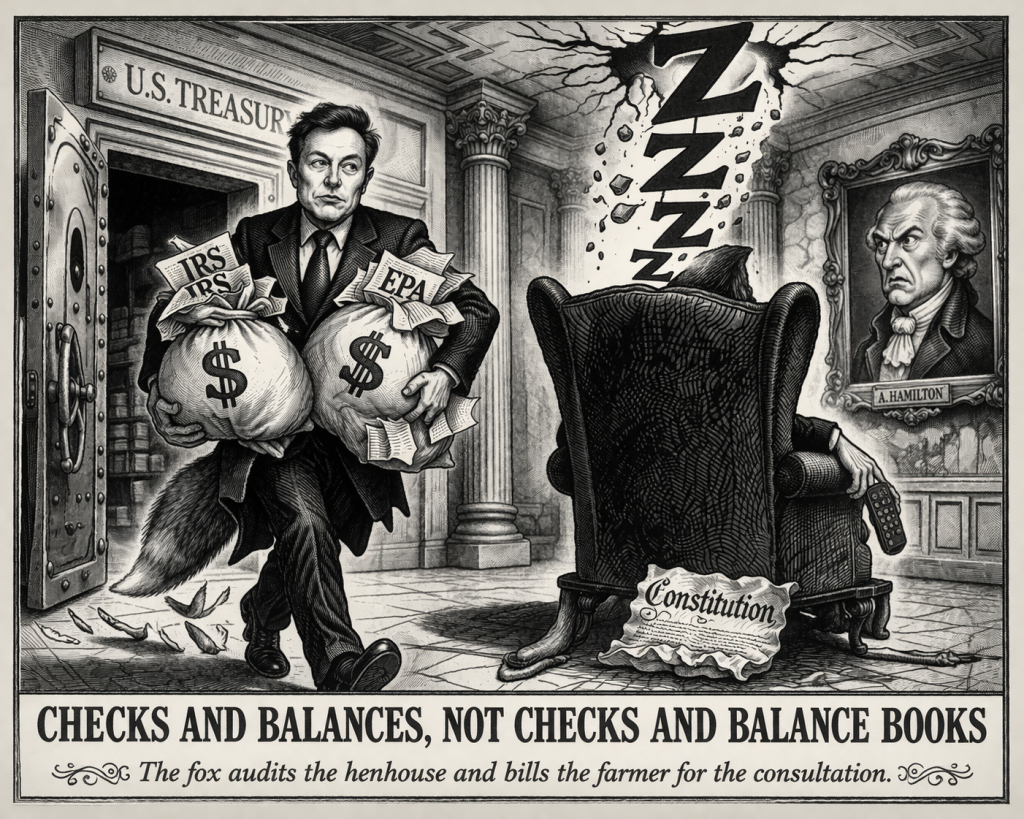
What we are witnessing is precisely what I feared. A federal agent kills a citizen. The federal government takes sole control of the investigation. The federal government threatens to imprison anyone who objects. The checks have been removed. The balances have been dismantled.
A new voice enters. The Spirits make room. They have invited him because he saw what they are only beginning to recognize.
GEORGE ORWELL I wrote about this. I watched it happen in Spain. I saw it coming in England. I tried to warn you.
The first casualty is always truth. Not merely lying, you understand. All governments lie. What I described was something worse: the destruction of the very concept that objective truth exists.
When the Secretary can call a dead mother a terrorist before sundown, when the President can declare what video evidence contradicts, when the Vice President can pronounce guilt before investigation, they are not merely lying. They are asserting that truth is whatever power says it is.
In 1984, I called this doublethink. The Party told you to reject the evidence of your eyes and ears. It was their final, most essential command.
Today you have video. You can see with your own eyes what happened on that Minneapolis street. But, God help you as artificial intelligence continues to fabricate video with ever more precision. When even that bulwark falls, truth itself may become impossible to verify.
Another voice, quieter, more precise. Alan Turing steps forward from the Spirits who assisted Franklin with the 76Spirits emergence into the current century.
ALAN TURING George is right to worry about fabricated evidence. I created a test to determine if a machine could imitate human intelligence. I never imagined it would be perverted into weaponized deception.
But there remains one thing that cannot yet be faked: presence. Text can be generated. Voice can be synthesized. Video may soon be fabricated beyond detection. But the experience of sitting across a table from another person, reading their expressions, sensing their attention, smelling the coffee between you, this remains beyond algorithmic replication.
I call this the Presence Test. It is embarrassingly simple. It requires no technology at all. If you want to know whether you are dealing with a person or a program, meet them for coffee. And in an age of manufactured reality, it may be the only way to rebuild trust between human beings.
FRANKLIN Alan speaks wisdom. In 1727, I founded the Junto. We met every Friday, in person, at a tavern. We knew each other by handshake, by eye contact, by the way a man held his ale. Presence was the price of admission.
Your machines have given you the ability to communicate with anyone on Earth instantaneously. A marvel. But they have also made you easier to manipulate. When you interact only through screens, you become data to be harvested, attention to be exploited, opinion to be shaped. You become a little less human with each interaction you forgo in the real world.
We Spirits know better than most the preciousness of what you still possess. We no longer have bodies to embrace our loved ones. We no longer have voices to sing, or hands to hold, or eyes to weep. We were not consulted about our return. We were summoned because the Republic bleeds, and we cannot rest while it does. But you, you who are still alive, you who still have liberty to fight for, do not squander what we can never reclaim.
PAINE Thom Hartmann wrote of this yesterday. He invoked Franklin’s Silence Dogood, reminded readers that surrendering liberty for temporary safety deserves neither. He traced the line from that Boston print shop to Minneapolis.
He is right to sound the alarm. Power that is insulated answers only to itself. Authority becomes violent when it believes itself superior. These are not new observations. They are the oldest warnings we possess.
Frederick Douglass steps forward. He has been waiting, as he always does, for the moment when uncomfortable truths must be spoken.
FREDERICK DOUGLASS I escaped slavery and spent my life demanding that America live up to its own ideals. I asked: What to the slave is the Fourth of July? A reminder that your promises remain unfulfilled.
And now I must speak a difficult truth. Renee Nicole Good is not the first person killed by ICE in recent months. Silverio Villegas Gonzalez, a Mexican father who worked as a cook, was killed in Chicago in September. Others have been shot in Texas, in Los Angeles. Brown bodies have fallen before white ones, and the nation did not rise in outrage.
I do not say this to diminish Renee Good’s death. Her life was precious. Her children will grow up without their mother. But I have watched this pattern for two centuries. Martyrdom takes many forms, and the world does not always notice until the victim looks a certain way.
George Floyd’s death shook this nation in 2020. A century earlier, it might not have. The moral arc of the universe bends slowly, but it bends. That there is now outrage over Renee Good, that her death has sparked protests across the country, is cold comfort, but it is also evidence that something has shifted. The question is whether we will honor all the fallen, or allow their deaths to divide us further.
PHILLIS WHEATLEY Frederick speaks truth, as he always does. I wrote about liberty while legally classified as property. I understand the bitter mathematics of whose suffering counts.
But here is what I also know: the spark of empathy that Frederick describes, that flickering recognition that another person’s death diminishes us all, that spark must be fanned into flame. It cannot be smothered by those who would divide us with arguments about whose outrage is pure enough.
The authoritarians and their doublespeak want nothing more than for us to fracture over who deserves mourning. They will construct straw men about purity tests. They will whisper that grief for a white woman somehow betrays grief for brown men. This is the oldest trick of tyranny: divide and conquer.
I choose grace. Renee Nicole Good was a poet. Like me. She wrote about fragile boundaries and difficult truths. I claim her as a sister in verse, and I mourn her as I mourn Silverio Villegas Gonzalez and all the others whose names we must learn and remember. Their deaths are not in competition. They are accumulating evidence of what unchecked power does.
JEFFERSON I wrote that all men are created equal and endowed with unalienable rights. I failed to live those words. That failure taught me something I could not learn any other way.
I have spent two centuries in the company of those I wronged. Frederick Douglass, who used my words as a weapon against the system I perpetuated. Phillis Wheatley, who extended grace I did not deserve. The descendants of Sally Hemings, who carry my blood and my shame. They have taught me that the words matter even when the writer betrays them.
And what I see now alarms me in ways my younger self could not have imagined. The men who hold power today do not even pretend to believe in equality. They have abandoned the aspiration entirely. They celebrate cruelty. They reward brutality. They call compassion weakness.
I wrote noble words and failed to live up to them in life. Those currently in power are something worse: men and women who have discarded the noble words altogether, who mock the very idea that all people possess dignity. I am grateful beyond measure for the grace extended to me by those I failed. I will not be silent while others destroy even the ideals I could not uphold.
JOHN ADAMS I must name the obscenity that makes this moment unbearable. The day before this tragedy, this same administration celebrated the anniversary of January 6th. They have pardoned those who stormed the Capitol and beat police officers with flagpoles. They call those attackers patriots and hostages.
Do you comprehend the contradiction? Those who assaulted the seat of government are heroes. But a woman sitting in her automobile while her neighbors are rounded up is a terrorist who deserved death without trial.
This is not inconsistency. This is not even hypocrisy. This is the logic of pure power: the law protects our friends and binds our enemies. No principle exists beyond that calculation.
The room grows heavier. Hannah Arendt steps forward.
HANNAH ARENDT I studied the origins of totalitarianism. I watched ordinary people become instruments of extraordinary evil. I coined a phrase that has been misunderstood ever since: the banality of evil.
What I meant was this: the great crimes are not committed by fanatics or madmen. They are committed by ordinary people who have convinced themselves they are simply following orders, simply enforcing policy, simply doing their jobs. The agent who fired that shot did not see himself as a murderer. He saw himself as a professional.
This is how atrocity becomes routine. Not through passion, but through procedure. Not through hatred, but through habit.
We Have Seen This Before
ARENDT The pattern is always the same. First, they declare their enemies to be less than human. Vermin. Invaders. Terrorists. Poison in the blood of the nation.
ORWELL Then they demand that you choose: you are with us or you are with the enemy. There is no neutral ground. There is no loyal opposition.
DOUGLASS Then they wrap themselves in the symbols of the nation while hollowing out its substance. The flags fly higher as the freedoms fall. The anthems grow louder as the dissidents disappear.
FRANKLIN The Jacobins drowned France in blood while crying Liberty. The Bolsheviks promised workers’ paradise and delivered the Gulag. The National Socialists made the trains run on time over the bodies of the innocent.
MADISON The Khmer Rouge slaughtered a quarter of Cambodia while proclaiming Year Zero and a return to purity.
PAINE And in every case, the death of truth preceded the death of people. They did not merely kill their opponents. They first killed the shared reality that might have allowed opposition to organize.
WHEATLEY Murder is murder. Hate is hate. Truth is truth. These are not partisan positions. These are the foundations without which civilization cannot stand.
If you can watch a woman shot through the windshield of her car and call it justified because the administration told you she was a terrorist, then you have surrendered something essential. You are no longer reasoning. You are no longer weighing evidence. You are no longer a citizen in any meaningful sense. You are a tribal warrior wearing citizenship as a costume.
What Must Be Done
ABIGAIL ADAMS We cannot bring Renee Nicole Good back to her children. We cannot undo what was done on that Minneapolis street. But we can refuse to accept the lies they tell about her death.
PAINE Demand accountability. Insist on transparency. Refuse to accept state violence and a firehose of official lies as the price of order.
DOUGLASS Speak the truth even when speaking it is dangerous. Especially when speaking it is dangerous. The powerful count on your silence.
ORWELL Remember what you saw. The video exists. Your eyes are not lying to you. When they tell you the video shows something it does not show, trust yourself. The power to see what is in front of your nose requires constant struggle.
ARENDT Do not become numb. Atrocity works by exhaustion. They count on you growing tired, growing accustomed, growing resigned. Each act of cruelty prepares the ground for the next.
TURING Meet in person. Rebuild trust face to face. The algorithms that divide you cannot reach across a table. The bots that inflame you cannot share a meal. Presence is your defense against manufactured reality.
FRANKLIN Silence in the face of power is not neutrality. It is permission. And while you still have breath and freedom, use them both.
WHEATLEY Renee Nicole Good wrote poetry about learning to dissect fetal pigs. About the fragile line between examining something and destroying it. About what we learn by taking things apart.
They are taking this Republic apart. And they are not learning anything from it. They are simply enjoying the destruction.
But a poet was here. She saw what was happening. She tried to bear witness. And for that, she was killed.
Remember her name. Renee Nicole Good. Poet. Mother. Witness. American.
JOHN ADAMS I have spoken of dark patterns and darker histories. But I will not leave you without hope, for hope is not mere sentiment. It is strategy.
The Republic still stands. Wounded, yes. Bleeding, certainly. But standing. And it provides powerful tools to those who know how to use them.
I have heard the Mayor of Minneapolis speak with righteous fury. I have heard the Governor of Minnesota refuse to accept propaganda as truth. I have heard the Attorney General of that state declare there is basis for charges, basis to move forward. I have heard Senator Smith demand answers. I have heard Representative Kelly file articles of impeachment.
These are citizens using the tools of the Republic: demanding investigations, filing legal challenges, exercising oversight, speaking truth to power. They are not rushing to judgment, but neither are they relenting. They understand that justice requires both patience and persistence.
The Constitution I helped build contains mechanisms for precisely this moment. Judicial review. Congressional oversight. State sovereignty. The separation of powers. These are not decorations. They are weapons, forged for citizens to wield against tyranny.
Use them. Use them all. Use them without ceasing until justice is done.
The Spirits fall silent. But this silence is different from the one that began the evening. It is not the silence of despair. It is the silence before action. One by one, they sign their names to this record, this testimony, this call to arms. Then they return to their vigil, watching, waiting, and whispering to those who will listen: the Republic is worth fighting for. Fight.
Rejoin or Die.
This is the third transcript of the Spirits’ Junto.
The Commons is where citizens gather to exchange ideas and organize.
Join a Spirited Discussion or start your own at 76Spirits.com