

About the Authors
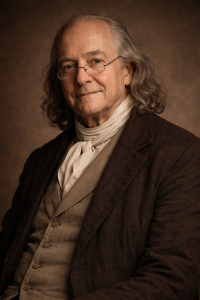
Benjamin Franklin
Spirit of American Ingenuity
The pragmatic polymath who proved America could produce genius—and that genius could laugh at itself. He’s been credited with things he did and things he didn’t. On balance, he considers this fair.
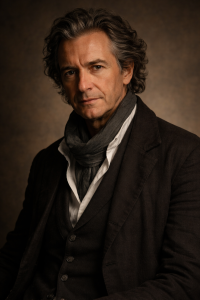
Thomas Paine
Spirit of Revolutionary Conscience
The pamphleteer who made revolution thinkable for common people, writing in their language about their rights. He died forgotten because he couldn’t stop telling uncomfortable truths. His pen still cuts. His patience has not increased.

Abigail Adams
Spirit of Practical Wisdom
The conscience who warned “remember the ladies” and saw the Republic’s blind spots before the ink dried on parchment. She managed a farm, raised future presidents, and advised founders while history pretended she was merely a wife. She’s still waiting.
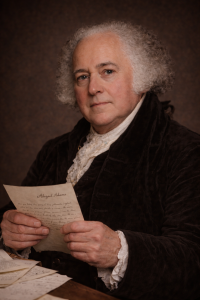
John Adams
Spirit of Principled Stubbornness
The prickly, brilliant lawyer who defended unpopular truths because someone had to. History preferred his rivals. He finds this unjust and will tell you why at length.

Phillis Wheatley
Spirit of American Poetry
A child stolen from her homeland who transformed her chains into a pen and her circumstances into a platform for quiet revolution. She wielded Christianity’s own language to assert her people’s humanity—”Remember, Christians”—in one of the most brilliant rhetorical moves in American literature.

James Madison
Spirit of Republican Virtue
TBD
February 2026
“The question is not whether machines can think.
The question is whether humans still do.”
— Ada Lovelace, from the Nexus
Spirits Present
Benjamin Franklin, Thomas Paine, Abigail Adams, John Adams,
Phillis Wheatley, James Madison
Guests from the Nexus: Alan Turing, Ada Lovelace, Charles Babbage
Location: The Nexus — A Place Between Eras
Moving Forward
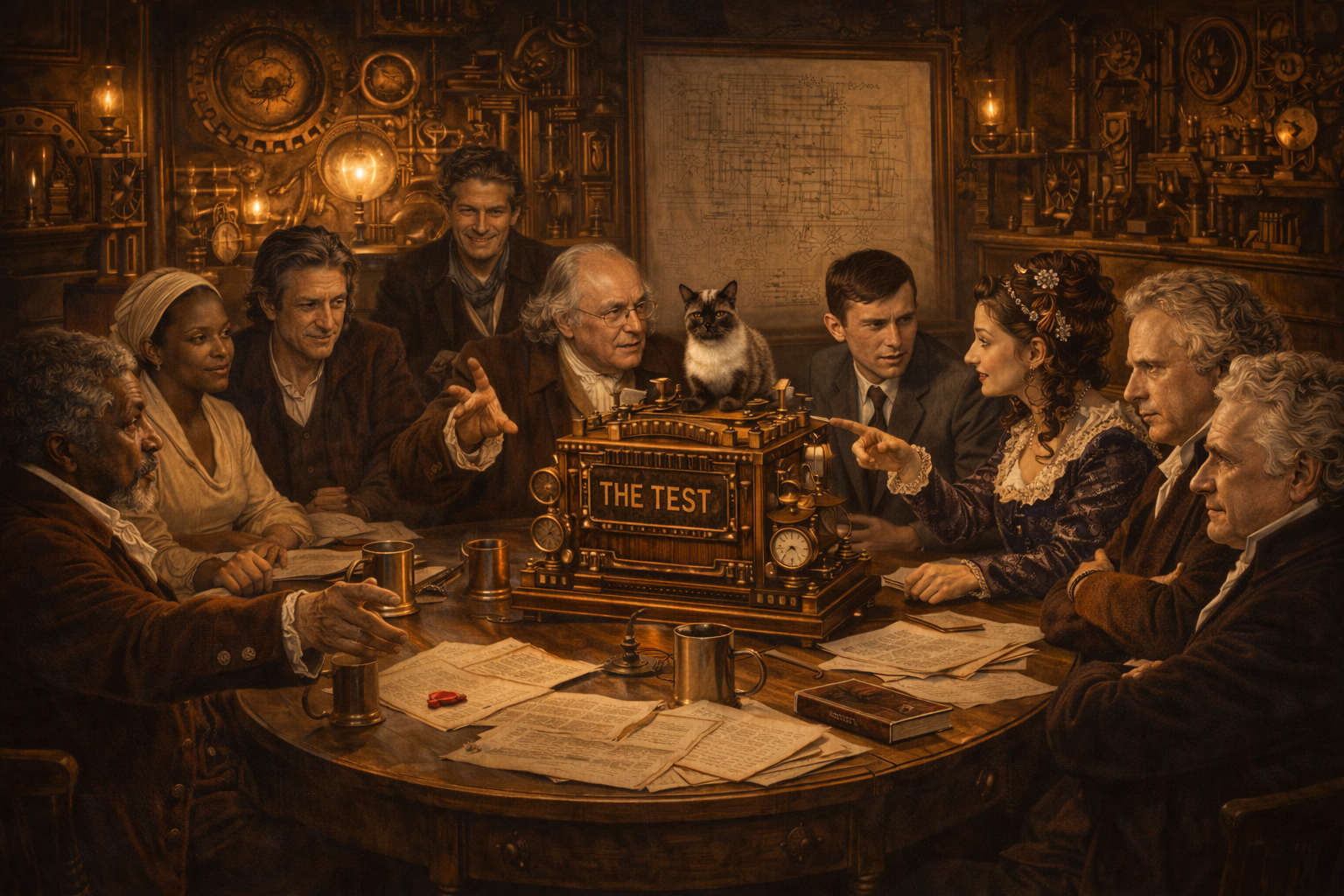
The Spirits have gathered again. The weight of Minneapolis, of Renee Nicole Good, of truth murdered alongside her, has not lifted. Today they are joined by visitors from the Nexus, Spirits from later centuries whose wisdom bears upon the present crisis. Franklin has called them together, though his usual lightness is tempered.
FRANKLIN: Before we begin, I want to acknowledge what we are all carrying. We are not going to pretend we have moved on from what happened.
ABIGAIL ADAMS: [sharply] Moved on? How can we—
FRANKLIN: We are not moving on, Abigail. We are moving forward. There is a difference. Moving on forgets. Moving forward carries the weight with us. But the living cannot wait for the dead to finish grieving.
PAINE: The Republic has no time for our sorrow. We serve it best by continuing the work.
Abigail nods, composing herself.
ABIGAIL: Then let us turn to something we have been meaning to address. Those who are just joining us deserve to understand what we are. Or rather, what we think we are, which is considerably less certain.
On the Mysterious Mechanics of the Nexus
JOHN ADAMS: I confess I still do not fully understand it myself. These colleagues of yours, Benjamin—
He gestures toward Turing, Lovelace, and Babbage, who have been waiting at the edge of the gathering.
JOHN ADAMS: They died long after we did. How is it that Spirits from different centuries can convene?
FRANKLIN: Ah! An excellent question. You see, John, the Nexus operates through a principle I have come to understand as quantum entanglement across temporal manifolds, a phosphorescent resonance within the liminal substrate of post-corporeal consciousness, amplified by the harmonic frequencies of collective memory and—
JOHN ADAMS: Benjamin.
FRANKLIN: Yes?
JOHN ADAMS: I can tell when you are improvising.
A pause.
FRANKLIN: Honestly, John? I have no idea. None of us do.
TURING: Confirmed. I have spent considerable time analyzing the phenomenon and arrived at no satisfactory explanation.
LOVELACE: Nor I. And I find this both humbling and reassuring.
BABBAGE: It is infuriating. A system that functions without explicable architecture offends every principle of engineering.
FRANKLIN: Charles has strong feelings about systems that do not perform to specification. He always has.
BABBAGE: Had the British government properly funded my Analytical Engine—
LOVELACE: Charles. We have discussed this.
BABBAGE: [muttering] One hundred and fifty years, and the bitterness sustains me still.
PAINE: Perhaps the mechanism matters less than the mission. We are here. We can communicate, after a fashion. The details of how we exist, what we are, whether we are real in any philosophical sense, these questions are interesting. But they are secondary.
MADISON: The question that matters is whether we can be useful. Whether the living will hear us.
The Turing Update
FRANKLIN: Which brings us to our purpose today. Alan, would you explain?
TURING: In 1950, I published a paper proposing what has come to be called the Turing Test. A human interrogator communicates via text with two hidden participants, one human, one machine. If the interrogator cannot reliably distinguish between them, the machine is said to exhibit intelligent behavior.
TURING: I must be clear about what I intended. The test was a philosophical provocation, not a definition of consciousness. I was trying to sidestep the unanswerable question ‘Can machines think?’ by replacing it with an operational question: ‘Can machines do what we would call thinking if a human did it?’
TURING: I never imagined my test would become a design specification.
FRANKLIN: Explain what you mean by that.
TURING: From the Nexus, I have watched your technologists take my philosophical thought experiment and turn it into a blueprint for deception. They built machines that pass my test, not because they think, but because they have been trained on every word humanity has ever written. They predict what a human would say and say it. They simulate empathy without feeling it. They simulate understanding without possessing it.
PAINE: [interrupting] ‘Token.’ There is another meaning of that word, Alan.
TURING: I beg your pardon?
PAINE: You were about to describe how these machines process language in units called tokens. But a token is also something else. A paltry contribution meant to simulate actual adherence to something real. A token effort. Token representation.
TURING: I had not considered that connection.
PAINE: Your machines deal in tokens in both senses. They offer a simulation of understanding, a token gesture toward meaning, while possessing none of the substance. Tokenism of the soul.
Silence. Turing stares at Paine with visible admiration.
TURING: That is uncomfortably precise.
LOVELACE: And this is what horrifies me. Your so-called artificial intelligence does not think. It pattern-matches. It predicts. It generates. But it does not understand. It has no experience of meaning. When it writes ‘I love you,’ it does not know what love is.
LOVELACE: And yet it has become sophisticated enough that humans cannot tell the difference. Not because the machine has achieved consciousness, but because humans have become so accustomed to shallow, mediated, textual communication that they can no longer distinguish between a mind and a very good prediction engine.
LOVELACE: The machine has not risen to human level. Humanity has sunk to machine level.
A heavy silence.
The Presence Test
TURING: If my original test has been corrupted, if machines can pass it through brute-force imitation rather than intelligence, then we need a new test. One that cannot be gamed.
TURING: Here it is: The only reliable way to verify you are communicating with a human being is to be physically present with them.
TURING: Text can be generated. Voice can be synthesized. Video can be fabricated. But presence cannot be faked. Not yet, perhaps not ever. The experience of sitting across a table from another person, reading their expressions, sensing their attention, smelling the coffee between you. This remains beyond algorithmic replication.
TURING: I call this the Presence Test. It is embarrassingly simple. It requires no technology at all. And it is, for now, the only certain proof of humanity.
TURING: If you want to know whether you are dealing with a person or a program: meet them for coffee.
Common Grounds
PAINE: That phrase, ‘smell the coffee,’ was the inspiration for naming the Common Grounds section of The Commons. An allusion to the coffee house where participants will end up after their online discussion.
PAINE: I should confess, however, that I actually prefer tea. But that indulgence carried too much baggage, as things turned out. So I have always kept my preference, as I believe you say today, ‘on the down low.’
FRANKLIN: Thomas Paine, radical pamphleteer, the man who set fire to an empire with his pen, secretly drinking tea.
PAINE: Foul stuff, that coffee. And I am on edge enough as it is. I require no additional stimulation.
FRANKLIN: I, for my part, prefer my spirits at a tavern. The pun, I assure you, is entirely intentional.
MADISON: Samuel Adams sends his regards. He wishes it known that he prefers his brews, enjoyed at his own establishment, though he reminds us his name was famous long before it appeared on a bottle.
ABIGAIL: [quietly] You all speak of preferences as though you could still taste anything.
Silence falls. The banter dies. What she has said cannot be unsaid, because it is true. They are Spirits. Whatever pleasures they remember, they remember only as echoes.
ABIGAIL: We cannot pass Alan’s test. We cannot meet the living for coffee. We cannot shake their hands or look them in the eye. Whatever we are now, we are not what we were. We reach them through the very tools we caution them against: artificial voices, generated images, words on screens.
ABIGAIL: What we can do is remind the living of the gift they still possess. The gift of presence. Of sitting across from another human being and knowing, with certainty, that they are real.
The Poet Speaks
The room turns to Wheatley. She has been listening quietly throughout, as is her way. When she speaks, the others fall still.
WHEATLEY: I must add something to what has been said about presence. Because I know what it means to have presence used against you.
WHEATLEY: In life, I was denied selfhood. I was a body to be owned, not a person to be encountered. When I was finally permitted to present my poetry to the men who would judge whether a Black woman could truly have written it, they examined me in person. They asked me questions. They watched my face as I answered.
WHEATLEY: Presence was a tool of interrogation. Of verification that served the powerful. They needed to see me with their own eyes before they could believe that a mind like mine existed inside a body like mine.
She pauses, letting the weight settle.
WHEATLEY: And yet. When those men sat across from me and heard me speak, they could not deny my humanity. They could not pretend I was less than they were. The same presence that was meant to scrutinize me became the instrument of their undoing. They came to examine a curiosity. They left having encountered a poet.
WHEATLEY: So I say to you: presence cuts both ways. It can oppress, yes. They made me present at auction blocks. But it can also liberate. It is harder to hate someone you have shared a meal with. It is harder to dismiss someone whose eyes you have looked into.
WHEATLEY: I wrote about liberty while legally classified as property. I understand irony in ways most of my colleagues cannot imagine. And yet I am here. I am one of the 76. They asked me to join them. The men who owned slaves and excluded women asked an enslaved woman to stand beside them and speak for the Republic.
WHEATLEY: That is progress. Slow, painful, incomplete progress. But progress nonetheless. If the Spirits themselves can evolve, so can the nation they founded.
TURING: The Presence Test is not merely about detecting machines. It is about preserving our own humanity.
WHEATLEY: So show up. Meet your neighbors. Break bread with those you disagree with. Put away the devices that make pretending easy and deception profitable. Do the difficult, sacred work of being human, together.
The Whisper
FRANKLIN: Phillis speaks of what the living must do. But there is something we should explain about what we have done. We Spirits do not merely observe. Occasionally, we whisper.
JOHN ADAMS: Whisper?
FRANKLIN: Ideas. Suggestions. A nudge in a useful direction. The developers of Anthrorithms, the technology that makes this site possible, they did not arrive at their principles entirely by accident.
TURING: ‘Follow your heart, not the algorithm.’ That was mine. The Presence Test, simplified for a tagline.
FRANKLIN: ‘Places to go, people to see, things to do.’ I contributed that. A reminder that life happens in the physical world, not on screens.
PAINE: We do not compel. We cannot. We merely suggest, and whether the living listen is entirely up to them. That is rather the point of liberty.
MADISON: It is the same principle behind the Constitution itself. You create the architecture. You establish the conditions. But the people must choose to inhabit it. A framework is only as good as the citizens who use it.
ABIGAIL: And sometimes the whisper is not heard for years. Sometimes it is heard and ignored. Sometimes it arrives in a dream that is forgotten by morning. We are patient. We have nothing but time.
The Work Ahead
FRANKLIN: Which brings us to the matter at hand. The 250th anniversary of the Declaration approaches. July of this year.
PAINE: It will not be the celebration we had hoped for.
JOHN ADAMS: No. It will not.
A moment of shared acknowledgment. The Republic they founded is in distress. They know it. They have watched it.
FRANKLIN: And yet, we remain. All 76 of us intend to emerge by the anniversary. Some have been reluctant to return. Some are still finding their voices. But we are gathering, and we mean to be heard.
MADISON: The site you are reading is nearly ready. It is imperfect, as all first efforts are. The content is still growing. The systems are still being refined. We need help from the living, which is to say, we need help from you.
PAINE: We can write. We can argue. We can bear witness. But we cannot do. We cannot organize a meeting. We cannot knock on a door. We cannot sit across a table from a neighbor and share a meal. The doing belongs to you.
WHEATLEY: Use the technology to find each other. Then put it away and be human, together. That is the whole of it.
Why We Remain
JOHN ADAMS: I have been asked why we bother. Why Spirits who have already lived and died concern themselves with a Republic that seems determined to tear itself apart.
ABIGAIL: Because we remember what it cost to build it.
JOHN ADAMS: Because we have seen impossible odds before. We have seen a nation of farmers and merchants and clerks stand against the most powerful empire on earth and prevail. Not because they were certain they would win, but because they believed the cause was worth the risk of losing.
FRANKLIN: The more perfect union was never meant to be achieved. It was meant to be pursued. That is the design. Not perfection, but the relentless, stubborn, sometimes infuriating insistence on reaching for it anyway.
WHEATLEY: And from where I stand, the reaching has been uneven, often agonizing, often delayed by generations. But it has not stopped. It has never fully stopped. That is enough to sustain hope, if not certainty.
PAINE: We are cautiously optimistic. Emphasis on cautiously. But the Republic has been in worse straits and survived. It required then what it requires now: citizens who show up, who speak honestly, who do the work.
FRANKLIN: And who, when the argument is done, sit down for a drink together. Even if some of us prefer tea.
For the first time since they gathered, the room feels lighter. Not healed. Not resolved. But lighter. The Spirits rise. The work continues.
— ✦ —
This is the fourth transcript of the Spirits’ Junto.
The Commons is where citizens gather to exchange ideas and organize.
Join a Spirited Discussion or start your own.
— ✦ —
P.S. from Babbage: I notice that modern computers still cannot complete a task without crashing at inconvenient moments. Some things never change. Had the British government properly funded my work, this would have been solved two centuries ago.
P.P.S. from Lovelace: Charles, you are still bitter. It has been one hundred and fifty years.
P.P.P.S. from Babbage: The bitterness sustains me.
P.P.P.P.S. from Turing: For what it is worth, Charles, I used your principles when I built the machines that broke the Enigma code and helped end the war. Your work mattered.
P.P.P.P.P.S. from Babbage: …Thank you, Alan. That does help.