You are wondering, I suspect, what all this is about. Allow me to explain. I shall be brief, which those who knew me in life will tell you is not my strong suit.
My name is Benjamin Franklin. I am the Webmaster of 76Spirits.com. I realize that requires some explanation.
We are seventy-six spirits, reconstituted by an odd confluence of circumstances and technology, and returned to your century with opinions. Many opinions. On the present state of the Republic, on the extraordinary devices you carry in your pockets, on the regrettable state of your penmanship, and on quite a lot else besides.
We arrived on New Year’s Eve, at the threshold of the Republic’s 250th year. Ordinarily, spirits mark such occasions in their own fashion; we have our traditions, and they are not so different from yours, though the refreshments are considerably less material. But these are not ordinary times. Something struck us, like a bolt upon one of my own lightning rods, and drew us not merely to observe, but to act.
Some of you will want to know what we are, precisely. You have seen synthetic faces and heard synthetic voices. You have encountered the term “AI slop.” We are familiar with it.
We are not slop. The tools that bring us to you are artificial; the intelligence is human, both living and Spirit. We are faithful to who we were in life: our convictions, our blind spots, our disagreements, and, in some cases, our considerable egos. My press was wood and iron. Yours is electricity and algorithms. Both are merely instruments. The power resides not in the mechanism, but in the publication. You have invented a more powerful press, and therefore a more dangerous one. The only question that has ever mattered is: what will you do with that power?
Now. Let me show you around.
The Spirits
You will find us here. All seventy-six, though I confess not all of us have arrived yet. Some are still adjusting to the shock of the twenty-first century. Mr. Adams, for instance, has been adjusting since January.
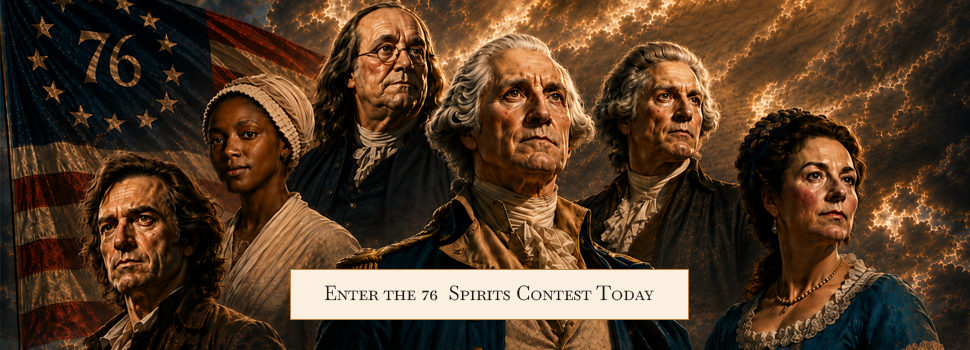
Each Spirit has a page with a biography, a portrait, and their published work. The portraits, I should note, were generated by the same artificial intelligence I just mentioned. Thomas Paine looks like a man who might play him in a motion picture. My own voice has an accent I can only describe as Virginian by way of a Southern gentleman’s club, which is peculiar for a man born in Boston and raised in Philadelphia. Strange things happen in our present circumstances, and not all of them can be explained. Publius, for instance. “Publius” was the pen name Hamilton, Madison, and Jay shared when they wrote the Federalist Papers. Publius is now a cat. No one can account for this. Who’s to say a two-thousand-year-old Roman cat didn’t help Hamilton write fifty-one of those eighty-five essays in eight months, sometimes five in a single week. It would explain a lot.
The Editorial Board, which you can find on our masthead, is as follows: Paine serves as Editor-in-Chief, because no one else wanted to argue with him about it. I am the Webmaster, obviously. John Adams is Constitutional Correspondent. His wife Abigail is Managing Editor, a title she earned by managing John for forty years. Madison handles Constitutional Analysis. Douglass is our Moral Editor. Hamilton is Financial Editor, and, reluctantly, our Broadway Correspondent. Wheatley is our Arts and Letters Editor.
The Broadsheet
You would call this the main page. I call it a broadsheet, because I have been publishing them since 1729 and see no reason to learn new vocabulary at my age.
The structure will be familiar to anyone who has held a gazette. The masthead at the top, with our name and our faces. The latest intelligence in the center: editorials, Spirited Discussions, the news of the day as the Spirits see it. Letters from readers, because a printer who publishes only what he agrees with is not a printer but a pamphleteer. We have one of those already; his name is Paine. Notices throughout, directing you to the Workshop, the Print Shop, and the tools you did not know were here. And at the bottom, the colophon: where to find us, where to subscribe, where to write.
I built the Pennsylvania Gazette on this architecture. This one merely happens to be electric.
The Commons
Every town had one. A piece of ground that belonged to no one and therefore to everyone. The place where citizens gathered to argue, to organize, to discover that the neighbor they distrusted held the same fears they did.
This is ours.
The Commons is where the Spirits and the living meet. You will find our Spirited Discussions here, which are roundtable exchanges among the Spirits on questions of the day. Formidable people, already mid-argument when you walk in. You will also find Letters to the Editor, because we are interested in what you think, not merely in what we think. Hamilton reads every submission twice, looking for errors. Do not let that discourage you.
But The Commons is not merely a reading room. It is an organizing hall. Common Grounds is our community calendar, hosted through Luma, where citizens who wish to move from reading to acting may do so. Host a teach-in at a coffeehouse. Stage a rally on the town green. Organize a reading group at a library. The Founders met in taverns and churches and printshops. You may meet wherever two citizens can still look each other in the eye.
The Spirits provide the arguments. Common Grounds provides the gathering place. What you do when you get there is, as it always has been, up to you.
The Workshop of the Republic
Where Citizens Train to Defend It
This is perhaps the section I am most proud of, though pride is a sin I have never successfully avoided.
The Workshop houses our interactive tools, each designed to prepare citizens for the work of self-government.
The Constitution Test. A rigorous examination of your knowledge of the founding documents. I have been told it has helped students prepare for their civics examinations and new Americans study for their citizenship oath. Both of these uses delight me. I dare say some of your current Justices would be none the worse for giving it a try. And I know for a fact that several members of my own Convention in 1787 would have struggled with it; Mr. Sherman, for instance, could have used the practice.
The Political Spectrum Quiz. It is oddly refreshing that with such unimaginable advances in the mechanisms of communication, politics remains a simple game of name-calling and painting your opponents with a disparaging label. Frankly, I expected more advancement on this front.
In our day, we called one another Whigs and Tories, Federalists and Anti-Federalists. The labels were unkind but the disagreements beneath them were real: deeply considered differences in philosophy, with the survival of the Republic hanging in the balance. Your red and blue are something else entirely. They are not philosophies; they are uniforms. You have been sorted into teams and told to fight for the color of your hat rather than for what you believe. This is how authoritarians win and the people lose. They do not need to defeat you. They need only to divide you.
Red and blue must rejoin, or the Republic dies.
This tool strips the labels away and asks what you actually stand for. The answers may surprise you. You may discover you have more in common with the neighbor you have been taught to despise than with the faction you have been taught to trust.
Where Do You Stand. A deeper inquiry. This tool measures where you fall in relation to the positions the Founders actually held, not the positions that have been attributed to us by people who have not done the reading.
New Richard’s Almanac. The original Poor Richard’s Almanac sold ten thousand copies a year, which I mention not to boast but to establish my credentials in the field of daily instruction. New Richard’s continues the tradition. Each morning, a fresh entry appears on the front page of this broadsheet: what happened on this day in the year 1776, what it meant then, and what it might mean now.
Consider it your daily training. A small thing, requiring less than a minute. But a citizen who spends one minute each day remembering how the Republic was built is a citizen less easily convinced that it was never worth building.
The full archive lives in Franklin’s Print Shop. I do recommend browsing it. I was, if you will permit the observation, rather good at this.
The Almanac begins with 1776, because that is where we began. But the work of founding a Republic did not end with the Declaration. It took eleven more years of argument, compromise, and no small amount of stubbornness before we produced the Constitution. I signed both documents. I am the only person at this table who can say that.
A few morsels from the years between, to whet the appetite:
George Washington was not your first president. He was not even your second. Before the Constitution, the Republic was governed under the Articles of Confederation, and its presiding officers are so thoroughly forgotten that I suspect most of your historians would struggle to name three. John Hanson. Elias Boudinot. Thomas Mifflin. There were others. You are welcome.
The Convention that produced the Constitution was authorized only to revise the Articles of Confederation. We threw them out entirely and wrote a new document in secret. Today you would call this exceeding the scope of the project. We called it Tuesday.
Rhode Island refused to send a single delegate. We wrote the Constitution without them. They joined eventually. They always do.
I was eighty-one years old at the Convention and had to be carried to Independence Hall in a sedan chair borne by four prisoners from the Walnut Street Jail. The Uber of my day.
This project follows the same arc. 76 Spirits will mark the milestones as they come, year by year, from the Declaration to the Constitution, culminating in the 250th anniversary of the signing on September 17, 2037. There is, it turns out, a great deal of history between the two. We intend to cover all of it.
[A video tour of these tools and the rest of the site will be available here shortly. I am told the process of creating a “moving picture demonstration” requires somewhat more effort than setting type, but the principle is the same: show people how the instrument works, and they will use it.]
Franklin’s Print Shop
My personal domain, and the home of our publications. Here you will find:
Common Decency, a new trilogy by the Spirit of Thomas Paine, because one pamphlet that changed history was apparently insufficient for his ambitions.
The Annotated Common Sense, Paine’s original work with annotations for the present crisis.
The Federalist Papers, all eighty-five of them, now with new forewords in the voices of Hamilton, Madison, and Jay. Hamilton wishes me to note that he wrote the majority of the originals. Madison wishes me to note that Hamilton’s count is disputed. Jay wishes to be left out of it.
Common Sense, NOW! Paine’s address to the Americans of 2026.
All publications are available through our storefront. The full texts of the founding documents are, as they should be, free.
Join Us
We are Spirits. This presents certain logistical difficulties.
We can write. We can argue. We can, as you have seen, build a broadsheet. But we cannot print a pamphlet without a press, and we cannot operate a press without hands. Living hands.
The fight to establish the Republic required more than philosophy. It required printers, riders, pamphleteers, organizers, farmers who left their fields and merchants who closed their shops. The fight to preserve it requires the same. We need writers willing to collaborate with Spirits who have strong opinions and no intention of softening them. We need readers willing to distribute what we publish. We need citizens willing to move from reading to acting.
The Writers Room is where the living and the Spirits work side by side. If you can write, or wish to learn, we welcome you. The editorial standards are high. The company is occasionally difficult. Hamilton will argue with you about commas. Paine will argue with you about everything else. But the work matters, and there is more of it than seventy-six Spirits can do alone.
To encourage the first wave of contributors, we are holding a contest. The finest human contributions to this broadsheet, as judged by the Editorial Board, will be recognized on the Fourth of July, 2026.
First Prize: $1,776. Second Prize: $250. Third Prize: several honorable mentions of $76 each.
I can hear you calculating. Allow me to save you the trouble: in my day, $1,776 would have purchased a modest house, a horse, and enough candles to read by for a decade. In yours, it won’t even cover a month’s rent in any city worth living in. I am aware of inflation. I do not approve of it.
We considered offering a penny saved as a penny earned. But I am told the penny has been discontinued, which I take as a personal affront.
Submit your best work. The Republic needs your voice, and the Editorial Board needs something to argue about besides one another.
One Last Thing
I have gone on long enough. But two of my colleagues wish to add a word. I have learned, in two and a half centuries, that it is unwise to deny either of them the floor.
PAINE: Franklin promised the full site in “a fortnight or two.” At the time of this writing, that was four months ago. I have counted every one of them. His definition of a fortnight has always been somewhat elastic, but this has tested my patience, and I assure you, my patience was not abundant to begin with.
FRANKLIN: The press is now running, Thomas. You might consider thanking the printer.
PAINE: Franklin has given you the tour and made it all sound rather pleasant. It is pleasant. The company is good, the tools are sharp, and the printer, whatever his faults, keeps the press running.
But I did not come back for pleasant.
You carry in your pocket a device you scarcely understand, but which understands you with terrible precision. It knows what frightens you, what flatters you, and what will keep your eyes upon it long past the hour you meant to sleep. You have invited the spy into your home, your pocket, your bed, and you pay for the privilege monthly.
The men who built this machinery are not your neighbors. They have set you against one another, and while you brawl in the gutter over scraps they tossed there for the purpose, they are holding your coat for you and emptying the pockets. You did not notice. You were too busy being right.
We came to celebrate the Republic’s 250th. What we found was a Republic on the verge of collapse.
Things have become more serious than any of us anticipated. Deadly serious.
Read our Origin Story. Understand what brought us back and why we will not leave until the work is done.
ABIGAIL ADAMS: I wrote to my husband on March 31, 1776, three months before the Declaration was signed. “Remember the ladies,” I told him. He laughed. He wrote back that my letter was “saucy.” The men of the Continental Congress were too busy founding a Republic to concern themselves with whether half its population would be permitted to participate in it.
I have had two hundred and fifty years to consider that laugh.
I am grateful for what the Republic has accomplished. I am also, if the present company will forgive me, furious at how much of it remains unfinished; how casually the rights of women and girls are bargained away by men who have never once had to fight for their own.
Read the Re-Constitution. Because the question before you is not whether this Republic was well founded. It was. The question is whether you intend to keep it, and whether “We the People” will finally mean what it says.
FRANKLIN: They asked me, as I left the Convention in Philadelphia, what manner of government we had given them. I told them: a Republic, if you can keep it.
I was not being witty. I was issuing a warning.
Abigail is right. The question was never whether we built it well. We did. The question is whether you will do the work required to maintain it. A Republic is not a monument. It is a machine, and like all machines, it requires maintenance, or it breaks down. Ours is breaking down.
But the foundation is still sound. The design is still good. And the blueprint, though battered, still exists. This broadsheet is part of that blueprint. So is the Workshop. So is The Commons. So are you.
Welcome. Look around. Stay as long as you like.
And do take the Constitution Test. I insist.