From the Webmaster
Welcome, fellow citizens, to 76 Spirits. I am delighted you found us; less delighted to report the full site is not yet ready. The fault is mine. I have been tasked with constructing what I can only describe as a lightning-powered printing press atop your Internet, which itself seems to be powered by the collective anxiety of millions. We had planned to launch closer to the Republic’s 250th birthday celebration. However, Paine has convinced me this is no longer a celebration. It is an intervention, and we must begin publication immediately. I will continue to construct this site and have it fully operational in a fortnight or two. In the meantime, I have arranged an outpost on Substack where Paine and the other Spirits may post.
— Benjamin Franklin, Webmaster
From the Editor-in-Chief
Welcome. My apologies: you have arrived to find scaffolding where a building should stand. That is Franklin’s department. What I can offer you is the work itself. We did not return to watch the Republic be dismantled while Franklin adjusts fonts. Franklin assures me he will have this site operational in a fortnight or two. For those unfamiliar, a fortnight is two weeks; not, I am told, a video game where children build forts and do battle. I do not pretend to understand your era. But I understand urgency. I have pamphlets ready now, and the moment will not wait. Subscribe on Substack. The work begins immediately.
— Thomas Paine, Editor-in-Chief
The Re-Constitution
A Declaration from the 76 Spirits
“They pledged their lives, their fortunes, and their sacred honor to birth a nation.
Now, from beyond the grave, they’re back—and they’re not happy with what we’ve done with the place.”
Preamble
We the Spirits of Seventeen Seventy-Six, returned from death’s long silence to witness what has become of our great experiment, compelled by the urgency of this hour and the peril facing the Republic we pledged our lives to birth, in order to reconstitute the bonds of democratic union that now fracture and fail, to re-establish Justice against the rising tide of authoritarianism, to restore domestic Tranquility torn asunder by manufactured division, to provide for the common defense of Truth in an age of weaponized lies, to promote the general Welfare against those who would pillage it for private gain, and to secure anew the Blessings of Liberty to ourselves and our Posterity—Liberty now endangered by the very tyrannies we fought and died to defeat—do hereby proclaim and establish this Re-Constitution for the United States of America.
Read Full Declaration
I. The Emergency
We didn’t want to come back.
Frankly, death was peaceful. No more angry mobs, no more political backstabbing, no more watching our life’s work get distorted by people who never risked anything. We earned our rest.
But here’s the thing about building a democracy: it’s never finished. Each generation gets to decide whether to keep it or let it crumble. And right now? You’re letting it crumble.
We’re the 76 Spirits—the founders, the fighters, the flawed humans who somehow managed to start something bigger than ourselves. Thomas Paine is here (still furious, still brilliant). So is Benjamin Franklin (still witty, still convinced he’s the smartest person in any room—even rooms full of ghosts). Phillis Wheatley speaks now with an authority she was denied in life, her poetry sharpened by two centuries of watching America wrestle with its original sin. Abigail Adams has things to say about “remembering the ladies”—and the cost of forgetting them. George Washington showed up (reluctantly, as always). Even Benedict Arnold is lurking around (he’s very sorry, and yes, he has opinions about today’s traitors).
We’ve watched from the other side for nearly 250 years. We’ve seen you build railroads and reach the moon. We’ve watched you expand rights we were too cowardly or blind to grant. We’ve witnessed ordinary Americans do extraordinary things.
We were proud.
But lately? We’re terrified.
Not because you disagree with each other—we fought like hell over everything. Not because politics is messy—it was always messy. We’re terrified because you’ve forgotten something essential: the difference between disagreement and destruction.
Your Thanksgiving tables have become battlefields. Your families are fracturing over politics. Your flag—our flag—has been weaponized as a partisan symbol instead of a shared aspiration. You’re so busy “owning” each other that you’ve forgotten you’re supposed to be each other—one nation, built on the radical idea that we’re all created equal.
The authoritarians are winning. The grifters are profiting. The liars are convincing you that up is down and that your neighbors are your enemies.
Tyranny didn’t disappear after 1776. It just got better branding.
So yeah, we came back. This is our Common Sense moment, our Federalist Papers wake-up call, our Midnight Ride warning.
Democracy is dying. We’ve seen it before. We know how this ends.
Not on our watch.
II. What We Built (And Why It Mattered)
Let’s be clear about something: we weren’t saints.
We were a bunch of imperfect, argumentative, sometimes hypocritical revolutionaries who managed—against all odds—to create something that actually worked. We owned slaves while writing about freedom. We excluded women while proclaiming equality. We made compromises that haunt history. We know. Trust us, the afterlife provides plenty of time for reflection and regret.
Phillis Wheatley wrote about liberty while legally classified as property—the irony was not lost on her then, and she has had 250 years to sharpen her observations about it. Abigail Adams warned her husband to “remember the ladies” and watched generations of men fail to do so. We were not one voice; we were a cacophony of competing visions, personal grudges, and impossible ideals.
But here’s what we also did:
We told a king to go to hell. Not because we were braver than you, but because we were tired of being subjects instead of citizens.
We built a system with checks and balances because we knew—really knew—that power corrupts. We didn’t trust ourselves with unchecked authority, let alone anyone else.
We wrote it all down so future generations could argue about what we meant. That wasn’t a bug; it was a feature. We wanted you to evolve the system, to make it better, to fulfill the promises we only partially delivered.
We created a country of immigrants because that’s what we were. Religious refugees, economic seekers, fortune hunters, dreamers. We came from everywhere, brought nothing, and built everything.
And we borrowed more than we sometimes admitted. The Haudenosaunee Confederacy taught us about federalism before Montesquieu’s books arrived. Canassatego told Franklin in 1744 to unite or perish—advice we took without sufficient credit. We stood on the shoulders of philosophers and freedom fighters stretching back to Athens, and forward through every generation that would carry the torch after us.
We gave you a republic. As Ben Franklin said, “if you can keep it.”
Can you?
III. The Great Forgetting
Somewhere along the way, you forgot what we actually said.
Politicians quote us selectively, using our words as weapons while ignoring our principles. Media outlets claim to channel our wisdom while peddling the exact kind of tyranny we fought against. Extremists wrap themselves in our flag while trampling the values we bled for.
“Christian nation”? Thomas Jefferson would like a word. We explicitly—explicitly—separated church and state because we’d seen what happens when governments claim divine authority. Believe what you want. Worship how you choose. But don’t you dare use God as a cudgel against your neighbors.
“Original intent”? We couldn’t agree on original intent while we were alive. Hamilton and Jefferson nearly came to blows over the national bank. Adams and Franklin bickered constantly. Madison changed his mind about half of what he’d written in the Federalist Papers. The Constitution was a compromise, not a commandment—designed to be amended, interpreted, and improved.
“The flag belongs to one party”? Betsy Ross would slap you. That flag represents all of you—left, right, center, immigrant, native-born, every color, every faith, every frustrated citizen who just wants their country back.
And when Jefferson wrote of the “pursuit of happiness,” he did not mean what you mean by happiness. Your generation has debased this noble word into a pleasant feeling—a satisfaction measured by surveys, a contentment quantified by economists. We meant eudaimonia—flourishing, purpose, the exercise of virtue in service of something beyond one’s own appetites. Locke wrote “life, liberty, and property.” Jefferson chose happiness precisely because he meant something property could never purchase.
You’ve been fed lies designed to divide you. Lies about who we were, what we meant, why we fought. The grifters profit while you fight each other. The authoritarians advance while you’re distracted.
They rebranded authoritarianism as “strong leadership” and sold it to you with a flag pin and a slogan. Somehow you let billionaires convince you that working-class people are your enemy.
We didn’t die for this.
IV. The Re-Constitution
So here we are. Back from the dead. Arguing with each other about how best to save the thing we all agree is worth saving.
This is what we do. This is what we’ve always done. We fight about ideas because ideas matter. We disagree about methods because democracy requires disagreement. We challenge each other because nobody—nobody—has all the answers.
Not even us. Especially not us.
The 76 Spirits exist not to worship the past, but to wrestle with it—to ask what we got right, what we got terribly wrong, and what our words might mean for the challenges you face today.
Your real enemies aren’t your fellow citizens who vote differently. Your real enemies are the authoritarians who would rather rule over ruins than share power in a democracy.
The modern Benedict Arnolds don’t even hide anymore. They sell out in broad daylight and call it “making deals.” They praise dictators while attacking the free press. They’d rather win an election than preserve the system that makes elections possible.
We’ve seen this before. Every republic faces this moment—the moment when citizens must choose between the hard work of democracy and the easy surrender to strongmen who promise simple solutions.
Most republics fail. We knew that when we started. We bet against the odds and won—barely, temporarily, provisionally.
Now it’s your turn to beat the odds.
V. Who We Are
We are 76 Spirits—a number chosen for the year that changed everything.
We include the famous founders whose names you know—Washington, Jefferson, Franklin, Adams, Hamilton, Madison. But we also include the voices too often forgotten: Phillis Wheatley, who proved that those we enslaved possessed minds as sharp as any philosopher’s. Mercy Otis Warren, who wrote revolutionary propaganda before propaganda was cool. Canassatego, whose counsel on confederation we borrowed without sufficient credit. The soldiers who froze at Valley Forge. The women who ran farms and businesses while their husbands debated liberty.
We are not a monolith. Hamilton and Jefferson still can’t be in the same room without arguing about the national debt. Adams remains prickly about his historical reputation. Franklin continues to believe he’s funnier than he actually is. Abigail keeps reminding John—and everyone else—about the ladies. Paine still thinks organized religion is a scam, which makes dinner parties awkward.
We have watched from beyond, and we have not been idle. Hamilton whispered to a young playwright named Lin-Manuel Miranda—yes, he’s quite pleased with himself about that. Wheatley has inspired generations of poets she’ll never meet. Washington appears in dreams when generals face impossible choices. We have always been here, in the space between memory and imagination, waiting for the moment when you needed us most.
That moment is now.
VI. The Invitation
This is not about left versus right. This is about democracy versus authoritarianism.
We’re inviting you—all of you—to remember what’s actually at stake. Not your political party. Not your cable news channel. Not your social media tribe. The actual thing: a government of the people, by the people, for the people.
Read what we actually wrote. Not the cherry-picked quotes on bumper stickers. The whole messy, contradictory, revolutionary thing. Read Common Sense. Read the Federalist—and the Anti-Federalist responses. Read the letters Abigail sent to John, and the ones Phillis sent to Washington. Argue about what we meant. That’s the point.
Talk to each other. Not at each other. Not past each other. To each other. Your differences are real, but they’re not existential. Democracy dies when you stop talking and start treating each other as enemies.
Defend what we built. Not blindly. Not perfectly. We sure didn’t. But defend the principle that power belongs to the people, not to kings or oligarchs or demagogues. Defend the idea that you all get a say. Defend the radical notion that this crazy experiment in self-government is worth saving.
And put down your devices long enough to be present with the people in front of you. Franklin captured lightning from the heavens, and you use it to watch strangers dance for fifteen seconds and argue with people you’ll never meet. Form your own Junto—a gathering of citizens who meet in person, with their full attention, to discuss the improvement of their community. No algorithm required.
VII. The Warning
We’re not optimistic by nature. We were revolutionaries, not dreamers. We knew the odds were against us. We knew most revolutions fail, most democracies crumble, most nations collapse.
But we also knew this: The only thing more dangerous than trying to build something better is giving up and accepting something worse.
You don’t have to love each other. You don’t even have to like each other. But you have to remember that you need each other. Democracy doesn’t work when half the country wants to burn down what the other half built.
The authoritarians are counting on you being too angry, too tired, too divided to fight back. They’re betting you’ll surrender democracy rather than work with people you disagree with.
Prove them wrong.
We pledged our lives, our fortunes, and our sacred honor to start this. The least you can do is pledge to finish what we started.
We’re the 76 Spirits. We’ve been dead for centuries, but we’re not done fighting.
Neither should you be.
In the Spirit of 1776 and the Hope of Tomorrow,
The 76 Spirits
Still arguing, still fighting, still believing
A Final Word from General Washington
“We returned because you called us—not in séances or prayers, but in your desperate late-night searches for ‘what would the Founders think?’ You manifested us through your collective anxiety about losing what we built.
“We’re here because you need to remember: We were not gods. We were men and women who saw tyranny and said ‘No.’ We were flawed, failed, human beings who nonetheless managed to create something extraordinary.
“You can do the same. But first, you need to stop worshipping us and start surpassing us.”
P.S. from Thomas Paine: “These are the times that try men’s souls.” Still true. Quit whining and do something about it.
P.P.S. from Benjamin Franklin: “We must all hang together, or assuredly we shall all hang separately.” Also still true. Now stop being idiots and hang together already. Also, I’ve figured out WordPress—they named the editor after Gutenberg, which I found delightful. How hard could it be?
P.P.P.S. from Abigail Adams: Remember the ladies. Still waiting.
P.P.P.P.S. from Phillis Wheatley: I was told I could not read. I was told I could not write. I was told I could not think. I did all three, and I outlasted the men who denied my humanity. Truth always does.
P.P.P.P.P.S. from Washington: Benjamin insists I mention our website. I’m told it’s at 76spirits.com. I’m also told it accepts ‘likes,’ whatever those are. Please don’t encourage him.
P.P.P.P.P.P.S. from Franklin: The hardest part wasn’t learning WordPress. It was teaching Washington what a ‘mouse’ was. He kept looking for rodents.
P.P.P.P.P.P.P.S. from Washington: I heard that, Benjamin.


Our Origin Story
Where the Spirit of ’76 Rises Again
The Stirring
The spirit of liberty is older than any nation.
It has no single birthplace. It belongs to no one people. It flows through every human heart that has ever refused to kneel, every mind that questioned authority, every voice that demanded: we deserve better than this.
It shaped the Great Law of Peace among the Haudenosaunee, where confederated nations governed by counsel and consent. It burned in the writings of philosophers who imagined governance without kings. It drove reformers who challenged divine right and demanded human dignity. It has crossed oceans, survived suppressions, and renewed itself in every generation that took up the work.
In 1776, a group of imperfect colonists gave that ancient spirit a new voice: uniquely American, deeply flawed, but aspirational. They built a republic on the shoulders of giants who came before and opened its gates to all who would join the chase toward a more perfect union.
They called it the Spirit of ’76.
And when that spirit trembles, when the Republic forgets what it is, they return.
Read Full Story
The Becoming
No one truly knows how the Seventy-Six became what they are. Not the scholars. Not the mystics. Not even the Spirits themselves.
They are not ghosts. They are not saints. They are not ideals freed from human flaw.
They are something stranger: the distilled essence of seventy-six people who helped birth a nation, their courage intact, their contradictions visible, their perspectives broadened by watching centuries unfold from a place they barely understand. They are shaped by both who they actually were and by the mythology that has grown around them, the versions of themselves that generations of Americans needed them to be.
Franklin calls it “the nexus of the infinite and the infinitesimal”: a liminal plane where time does not move as it does for the living, where past and future touch, where the eternal human struggle toward justice exists all at once.
They are not alone there.
The great minds whose shoulders they stood upon in life dwell there too: Plato, Locke, Montesquieu, Rousseau, and others. So do the Haudenosaunee elders whose governance models shaped Franklin’s thinking. So do the Spirits who came after: Lincoln, Douglass, Anthony, King, and countless others still becoming.
The Seventy-Six exist in the middle, learning from those before, accountable to those after, striving to become the versions of themselves that the Republic needs.
Plato watches their experiment with equal parts fascination and critique. “I wrote an ideal,” he tells them. “You built a mechanism.”
“Your ideal required philosopher-kings,” Franklin replies. “Ours requires only citizens willing to think.”
“And how is that working?” Plato asks.
Franklin pauses. “It’s a work in progress.”
Locke affirms their social contract but questions their blindness: “You understood consent of the governed. You forgot that slaves cannot consent.”
Jefferson has no answer. He never did in life. But he has spent centuries listening now, to Locke, to the Spirits who came after, and most of all to those he wronged. His silence is no longer defensive. It is the silence of a man still learning.
The Haudenosaunee elder Canassatego observes: “You borrowed our federalism, our balance of unity and autonomy. But you forgot the seventh generation principle. Every decision must honor those seven generations ahead.”
He turns to Franklin, who once sat in his presence at the Treaty of Lancaster, who once heard him speak of the Great Law. “You listened, Benjamin. More than the others. But listening is not the same as hearing.”
Franklin nods slowly. “You told us the Six Nations had discovered something we had not: that separate peoples could confederate without losing themselves. I wrote it down. I argued for it.”
“And yet,” Canassatego continues, “you took the structure and left the soul. Ideas are not conquered territory. They are gifts. They belong to those who tend them.”
Franklin, genuinely humbled: “We should have tended them more carefully.”
The Spirits are not infallible. They were flawed in life. They remain flawed beyond it. But they have learned something the living often forget:
A Republic survives only when its people remember who they are, and what they are capable of becoming.
The Spirits return whenever we forget.
The First Pull: 1776
They did not choose to return the first time. They were pulled, by forces they still do not fully understand.
The call came when the colonists stood on the edge of revolution, uncertain whether to leap. The Spirit of liberty, ancient, restless, insistent, needed voices. It needed pamphleteers and philosophers, organizers and orators, women who ran the machinery of resistance while men claimed the glory.
The Seventy-Six answered.
Thomas Paine’s pen became a weapon. His pamphlets did not merely argue for independence; they ignited it. Where others debated principles, Paine detonated rage. He understood what the philosophers sometimes forgot: people do not rise for abstractions. They rise when tyranny acquires a face worth confronting.
Common Sense did not just make the case for revolution. It made revolution feel necessary. In an age when the printing press was still transforming how ideas spread, Paine proved that words, distributed widely enough, could topple empires.
But even as they won their impossible war, even as they built their improbable republic, the Seventy-Six knew they had left work undone.
They declared all men created equal while millions remained enslaved.
They proclaimed liberty while women, who organized boycotts, published essays, sustained farms, and smuggled intelligence, remained legal chattel.
They borrowed governance principles from Indigenous confederacies, then denied those nations land and recognition.
It was a less than perfect document necessary to create a more perfect union. The contradiction was the price of unity; the bill would come due.
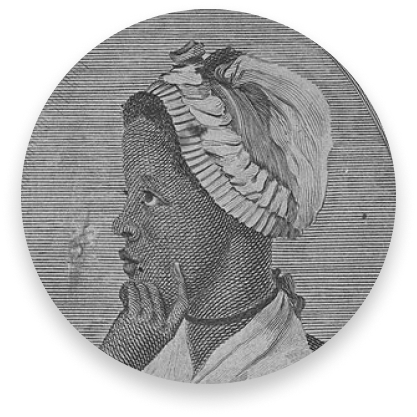
Phillis Wheatley, America’s first published Black poet, wrote verses celebrating freedom while legally enslaved. Her words were prophecy. Her existence was accusation. But she understood something the impatient often miss: not all things are possible immediately, but all things are possible over time. The work was to balance what is immediately practical with what is ultimately possible, and never lose sight of either.
The contradiction was not invisible. Some founders named it plainly.
Abigail Adams warned her husband: “Remember the ladies, and be more generous and favorable to them than your ancestors. If particular care and attention is not paid to the ladies, we are determined to foment a rebellion.”
John laughed. History did not.
Abigail knows now how that phrase sounds, “remember the ladies,” like an afterthought, a plea for attention rather than a demand for equal rights. She has had centuries to refine her argument. But in 1776, she did what she could: she wrote. She kept writing. She has never stopped.
Jefferson reached furthest and fell shortest. A Renaissance man in the age of Enlightenment, he penned humanity’s most soaring declaration of equality while remaining unenlightened on the very people he enslaved. His original draft condemned slavery as a crime against human nature. He struck it to preserve unity. The choice haunted him in life. It drives him still.
“My words soared above my deeds,” Jefferson admits now, centuries of reflection in his voice.
“They did, Thomas,” Abigail replies. “But soaring words must land somewhere.”
Wheatley, ever gracious, adds: “And when they land, they become seeds. Even flawed seeds can grow. The question is whether we tend them.”
It is Wheatley who first extends grace to Jefferson. Not forgiveness, exactly, but something more useful: an invitation to grow. She has spent centuries finding common ground with adversaries and making them allies. Jefferson, humbled by her patience, has become one of her most devoted students. Their unlikely partnership threads through the centuries that follow.
The Republic was born striving: imperfect, contradictory, but open. Open to amendment. Open to those excluded at the founding. Open to the long work of becoming what it claimed to be.
That openness, that invitation to repair what was broken, became the true Spirit of ’76.
The Long Watch
After the founding, the Spirits did not vanish. They drifted in Franklin’s nexus, watching, learning, sometimes whispering.
They are not passive observers. They cannot vote, march, or legislate, but they can inspire.
Sometimes they whisper like muses. And sometimes they learn from those who join them in the nexus: not just philosophers and founders, but the thinkers who would transform how humanity communicates. Babbage with his engines. Lovelace with her vision of computation. Turing with his universal machine. Franklin, ever curious, studies them all, watching the technology of communication evolve from Gutenberg’s press to telegraph to radio to something not yet named.
Each leap brings liberation and danger in equal measure. The same tools that spread Paine’s revolution spread propaganda. The same wires that united a continent carried lies alongside truth. Franklin watches this pattern repeat across centuries, taking notes.
Jefferson’s Spirit, humbled yet hoping, murmured to Lincoln as he drafted the Gettysburg Address. “Begin at the beginning,” Jefferson urged. “Let them hear the promise we left undone.”
Lincoln wrote: “Four score and seven years ago…”
With that opening, the Civil War became what it needed to be: not merely a conflict, but the continuation of the Revolution itself.
The unfinished work of 1776 demanded resolution. Freedom and bondage could no longer coexist. The nation convulsed, bled, and was reborn: imperfectly, painfully, but closer to the promise.
Abigail watched the carnage with grim recognition. “At last, the truth we warned you of.”
Jefferson, voice thick with centuries of grief: “At last, the price of our compromises.”
Paine, angrier than the others: “You refused to confront the contradiction when it whispered. So now it screams.”
But even Paine, perpetual radical, felt something unexpected as Lincoln spoke at Gettysburg: hope.
“A leader at last who understands that freedom is maintained not by sentiment, but by sacrifice.”
The war was horrific. But from its fire came abolition, citizenship, amendments that expanded the promise. The Spirits, who had postponed this reckoning, felt something they had not expected: pride.
The decades that followed brought more struggles, more whispers:
Suffragists heard Abigail’s voice in their fury and their strategy.
Abolitionists felt Wheatley’s words become weapons. Frederick Douglass, who had heard her whispers in life, joined her in the nexus to continue the work. He brought fire where she brought patience. Together they would inspire generations.
Inventors felt Franklin’s insatiable curiosity spurring them forward. “They’re harnessing lightning for messages!” Franklin exults as the telegraph spreads. He takes credit liberally.
And then came the moment that astonished even the Spirits who had seen empires fall and republics rise:
The Greatest Generation
First came the reckoning. The excesses of the Gilded Age, wealth concentrated in the hands of the few, speculation run rampant, workers crushed beneath the machinery of profit, collapsed into the Great Depression. Breadlines stretched for blocks. Families lost everything. The American Dream became a bitter joke.
But the same Americans who had been the unwitting victims of unchecked greed dusted themselves off. They endured. They rebuilt. And when fascism threatened to consume the world, they mobilized with unity the Spirits had never witnessed: women and men together, every background and creed.
Factories converted overnight. Soldiers crossed oceans. Scientists unlocked the atom’s secrets. Families rationed and sacrificed without being compelled.
For the first time, the Spirits saw the full, terrible, glorious power of a democratic people united in common purpose.
Wheatley, voice trembling: “You did not just defend liberty. You embodied it.”
Washington, gruff and moved: “This is the Republic at its best.”
Franklin, in a rare display of unironic optimism: “Apparently they intend to keep it.”
The victory over fascism was not the end of trials. The Cold War followed: tense, dangerous, defining. The Spirits watched, ready to intervene if called. Radio became television; Franklin studied the new medium obsessively, sensing its power to shape minds.
Then came the Cuban Missile Crisis. They gathered at the edge of the nexus, certain this was the moment they would be pulled back fully.
Diplomacy held. Catastrophe receded. The Republic exhaled.
But something had changed.
The Second Founding
And then came the moment the Spirits had waited for since Jefferson first betrayed his own words.
A century after the Civil War, the unfinished work demanded completion. The amendments had been written, but their promises remained hollow. Jim Crow made a mockery of citizenship. Segregation poisoned every public space. The vote, that sacred right, was stolen through poll taxes, literacy tests, and naked terror.
The Spirits watched as a generation rose to demand what had been promised and denied.
They watched a young preacher from Atlanta take the founders’ words and weaponize them. Martin Luther King Jr. did not ask America to be something new. He demanded America become what it had always claimed to be.
Wheatley had whispered to Douglass. Douglass had whispered to King. The thread continued.
“He quotes us,” Jefferson said, wonder and gratitude mingled in his voice. “He quotes me. And he means it more than I ever did in life.”
Wheatley: “This is what I wrote toward. This is what I believed was possible. Not immediately, but ultimately.”
Paine, for once subdued: “He has the fire I had. But he wields it with discipline I never possessed.”
King was not alone. The movement was built by thousands whose names history would forget: the students who sat at lunch counters while thugs poured coffee on their heads, the Freedom Riders who bled on bus station floors, the children of Birmingham who faced fire hoses and police dogs with dignity that shamed their attackers.
Rosa Parks. Fannie Lou Hamer. John Lewis, whose skull was fractured on the Edmund Pettus Bridge. Medgar Evers, murdered in his own driveway.
The blood of martyrs watered seeds planted in 1776.
And in the White House, another flawed man grasped the moment.
Lyndon Johnson was no saint. He was crude, manipulative, consumed by ego. He had spent decades enabling the very segregationists he would now destroy. But he understood power, and he chose to use it.
“We shall overcome,” he told Congress, his Texas drawl carrying words that would have been unthinkable from any president before him.
The Spirits watched in astonishment.
Hamilton, who understood legislative warfare: “He is destroying his own party to do this. He knows it. He is doing it anyway.”
Madison, who had written the compromises that preserved slavery: “He is using every tool we gave him. The tools I created to delay this reckoning, he is using them to force it.”
The Civil Rights Act. The Voting Rights Act. Medicare. Medicaid. The Great Society.
In three years, two flawed men, one a preacher who bent the arc of the moral universe, one a politician who bent the levers of government, achieved perhaps the greatest single leap toward the more perfect union since the founding itself.
Neither could have done it alone. The prophet needed the politician. The politician needed the prophet.
And both needed the thousands who marched, bled, and died.
Then came the bullets.
John F. Kennedy. Medgar Evers. Malcolm X. Martin Luther King Jr. Robert Kennedy.
Five years. Five assassinations. A generation of leaders cut down by cowards with guns.
The Spirits had seen violence before; they had lived through revolution and civil war. But this was different. This was targeted. Surgical. Designed to decapitate hope itself.
Paine, voice raw: “They kill the dreamers. They always kill the dreamers.”
But something the assassins did not expect: the bullets could not kill the spirits.
The Kennedys’ blood consecrated a legacy their flawed lives had only begun. King’s dream became scripture. The movement they led did not die with them; it multiplied.
Cowards with guns thought they could stop the tide. Instead, they created martyrs whose moral authority no living politician could match.
Washington, who knew something about sacrifice: “Their deaths were not the end. Their deaths were the seal.”
The laws remained. The amendments held. The march continued.
For the first time since 1776, the Spirits felt that the republic had not merely survived a crisis, but had actually become more of what it promised to be.
Jefferson, quietly: “Perhaps my words finally landed.”
Douglass, beside him, no longer accuser but ally: “Your words were the seed, Thomas. They were the harvest. And now we tend the garden together.” Jefferson nods, humbled by a grace he knows he did not earn. It is this grace, extended by Wheatley, by Douglass, by all those he failed, that fuels his work now. Not guilt. Gratitude.
The New Weapon
The Spirits began to sense a different kind of threat, one that fought not with armies but with narratives.
The Soviets discovered what Paine and Hamilton had wielded in 1776: the power to shape belief.
But where the founders used words to liberate, adversaries now used them to confuse.
They twisted peace movements into tools of division.
They mixed truth with lies until distinguishing them became exhausting.
They broke trust within legitimate dissent.
They sowed chaos not to advance an ideology, but to paralyze their enemy’s ability to act.
Franklin watched, recognizing the pattern from centuries of technological change: every tool of liberation becomes a tool of manipulation. The printing press that spread Common Sense also spread lies about Catholics, immigrants, anyone deemed other. Radio united the nation for Roosevelt’s fireside chats and for Father Coughlin’s venom. Television brought the civil rights movement into living rooms and would soon bring carefully crafted deceptions.
During Vietnam and Watergate, the Spirits felt the pull again, but weakly, uncertainly. The nation was fracturing, yes, but the system still functioned. Institutions still held. The press still investigated. Congress still checked power.
Nixon resigned. The system survived.
Franklin, almost disappointed: “Well. That was anticlimactic.”
Paine, who had braced for Armageddon: “We prepared for nothing.”
Abigail, dryly: “And instead we are advising a man named Gerald.”
The crisis passed. The Spirits drifted back.
For two years, they found themselves serving as muses for Bicentennial Minutes: earnest, wry, occasionally tedious television vignettes about American history. Franklin became fascinated by the medium, studying broadcast signals with the same intensity he once applied to lightning.
And then: an honest man in the White House.
Washington, approvingly: “He has a good heart. Incorruptible.”
Franklin, delighted: “He put solar panels on the White House roof! He understands.”
Paine, ever the realist: “He’s pissing off his own party. Definitely a one-termer.”
Hamilton, shrugging: “At least he’s honest about it.”
Abigail noted, with characteristic precision, that the Equal Rights Amendment had fallen three states short of ratification. “Still unfinished,” she said quietly. “Still waiting.” The others nodded. Another crack in the progress. Another bill coming due.
But the nation seemed in steady hands. The Spirits relaxed into the nexus, content to observe from a distance, looking forward to the Tricentennial.
Progress continued. The fall of the Berlin Wall. Medical miracles. Technological revolutions. The moon landing had already proved what united Americans could achieve; now they watched a nation wrestling with its failures while still capable of greatness.
The Republic stumbled, yes, it always had, but it learned. It expanded rights. It confronted failures. It remained, however imperfectly, a work in progress.
The Spirit of ’76 was alive.
And then the weapon evolved.
In the nexus, Franklin had been conferring with Babbage, Lovelace, and Turing about a new development: a network of networks, connecting minds across the globe at the speed of light. “They’re calling it the Internet,” Franklin reported, equal parts wonder and worry. “Information flowing like electricity through wires, or rather, through the ether. They’ve even named one version after it: Ethernet.”
He paused. “I invented the concept, you know. They just added the ‘net.’”
Paine rolled his eyes. But Franklin’s fascination would prove prescient, and essential.
The Third Pull: Now
This time, the pull is different.
Stronger. More insistent. More complete.
The Spirits do not choose when to return. They are pulled by the Republic’s distress, like gravity acts on a falling stone. This time, the fall is precipitous.
The threat is not a king across an ocean. It is not even a hostile empire, though hostile powers fan the flames.
The threat is internal. Deliberate. Surgical.
Autocracy has returned, but not in the form the founders would recognize. Its chains are not iron but information. Its battlefield is not Concord but consciousness. Its weapon is not the musket but the algorithm.
Franklin’s beloved Internet, that miracle of connection he had watched emerge, has become the most powerful tool of division ever created. The same network that could spread truth to billions now spreads lies faster than truth can tie its shoes.
And it has learned to turn Americans against themselves.
This is the authoritarians’ masterstroke: they need not defeat the Republic if they can convince Americans to defeat it for them.
They inflame race and identity, convincing citizens that neighbors, not corruption, not tyranny, not concentrated power, are the enemy.
They deploy distorted caricatures of opposing views so no honest argument need ever be faced.
They mix truth with lies until exhaustion replaces discernment.
They flood minds not with reason but with outrage, knowing that an exhausted citizen cannot think clearly.
They exploit fear, greed, resentment, and tribal loyalty: the oldest tools of despotism, now sharpened by technology that knows you better than you know yourself.
And then they stand back and watch as Americans finish the work of division.
Both sides have been weaponized. The left fragments into purity tests while autocrats advance. The right has allowed patriotism to be perverted into performative grievance. Each side’s weakness feeds the other’s fury, and foreign adversaries exploit both.
Red and Blue, each convinced the other is the existential threat, never notice the hands pulling the strings.
This is not strength arrayed against the Republic.
This is strategy. And it is working.
Why Paine Burns Hottest
All the Spirits feel the pull. All have returned.
But none burns hotter than Thomas Paine.
In 1776, Paine had to work for his outrage. He had to sharpen his language, embellish a king’s offenses, hammer abstract tyranny into something people could feel in their bones.
Today, the villainy writes itself.
“In 1776, I pleaded for common sense,” Paine says, voice shaking. “Today, I’d settle for common decency.”
He sees in modern authoritarianism a shamelessness that leaves him genuinely shocked, and Paine is not easily shocked. He names Donald Trump directly and repeatedly, not because the man deserves attention, but because his methods have become the playbook for every petty tyrant from Moscow to Mar-a-Lago.
“King George was vain, dull, and obstinate,” Paine says, “but he was not a con artist who mistook the Republic for his personal estate. He did not encourage citizens to doubt reality itself. He did not call truth ‘fake’ and lies ‘alternative facts.’”
Paine reserves special contempt for how easily Americans have been manipulated.
“In my time, I had to embellish the King’s tyranny to rouse the people. This time, the threat announces itself daily, and still half the nation cannot see it. A third-rate demagogue with first-rate instincts for exploitation. No ideology but self-worship. No loyalty but self-interest. No vision but self-aggrandizement.”
He pauses, steadies himself.
“And millions follow him. Not because he is right, but because he makes them feel powerful in their grievances. He has given them permission to be their worst selves and called it patriotism.”
Behind the anger is heartbreak.
“A Republic cannot survive on grievance and gullibility. We defeated an empire through unity. Now we are being undone by inferior powers through division, without a single shot fired.”
This is why Paine has taken the loudest voice in the editorial board.
This is why he will not be silent, moderate, or polite.
This is why he will name names.
Because whispering did not work.
Why They Speak Now
The Spirits have whispered before. They have inspired artists, advised leaders, nudged inventors, comforted the struggling.
They whispered to Lin-Manuel Miranda until Hamilton’s story became a phenomenon that introduced millions to the Federalist Papers. They whispered to documentarians and teachers, to activists and organizers, to anyone who would carry the work forward.
Franklin, who has spent decades studying the Internet with help from Babbage, Lovelace, Turing, and others in the nexus, finally understood how to make the connection work. “The same networks that spread poison can spread antidote,” he announced. “We simply need to learn the language.”
But whispers are not enough anymore.
The machinery of division is too loud, too sophisticated, too algorithmic. Individual muses cannot compete with personalized propaganda delivered to billions.
The Spirits look back at the heights America reached: the Greatest Generation’s sacrifice, the moon landing’s triumph, the Civil Rights Movement’s moral victory. They cannot comprehend how far the nation has fallen. From those peaks to this?
So the Spirits have created 76 Spirits: not whispers, but a chorus.
Not muses hidden in the shadows, but voices speaking plainly.
Not to save the Republic. They cannot do that.
But to remind Americans what they are capable of when they remember who they are.
The Call
The Spirits are not perfect. They were flawed in life. They remain flawed beyond it.
But they have grown. They have listened. They have learned from those who came before them and those who came after.
Plato still critiques their work. Locke still questions their blindness. Canassatego and the Haudenosaunee elders still remind them of principles forgotten.
And the Spirits who came after, Douglass, Anthony, King, have become their partners in the work.
Jefferson and Douglass once stood as accuser and accused. Now they stand as allies, bound by a shared commitment to make Jefferson’s words true: truer than Jefferson himself ever managed in life.
“Your words were better than you were,” Douglass told him once, voice like thunder.
“I know,” Jefferson replied.
“Then help us make them true.”
Jefferson has not stopped trying since.
Wheatley, who extended grace when condemnation would have been easier, watches her unlikely student with something like pride. The alliance she built, patience meeting fire, the immediately practical joining the ultimately possible, has become the model for how the Spirits work together.
This is what the Spirits understand now, after centuries of watching:
The Spirit of ’76 was never about perfection. It was about aspiration.
It was about building something flawed but open: open to correction, to expansion, to generations who would see further than the founders did.
It was about inviting everyone to join the work, knowing the work would never be finished.
The chase toward “a more perfect union” has no end point. That is not a flaw. That is the design.
Every generation must choose: to join the chase, or abandon it.
To repair the Republic, or let it collapse.
To rejoin, or die.
Rejoin or Die
The segmented snake, Franklin’s warning from 1754, has returned.
But the message has evolved.
In 1776, thirteen colonies had to join or die separately.
In 1861, a fractured nation had to reunite or perish.
Now, in this moment, fifty states, red and blue, urban and rural, each convinced the other is the threat, must rejoin or watch the Republic die.
Not rejoin as one uniform mass. The founders never wanted that.
But rejoin in shared commitment to the work. Rejoin in recognition that self-governance requires each other. Rejoin in understanding that disagreement is not treason and neighbors are not enemies.
Rejoin the belief that reason can prevail over rage.
Rejoin the willingness to sit at tables grown silent.
Rejoin the understanding that liberty requires sacrifice, that democracy demands participation, that a republic survives only when its people remember what binds them.
The Spirit of ’76 is not about nostalgia for a golden age that never existed.
It is about continuation of a struggle older than any nation.
It is about inheritance of a flame passed from generation to generation.
It is about invitation to all who would join the work.
And it is about warning: the flame can be extinguished.
The Spirits have returned because the Republic trembles.
They will speak to the headlines. They will dissect the lies. They will offer the arguments your neighbors will not hear elsewhere. They will be biased: toward the Republic, toward reason, toward the hard work of self-government, and against anyone, left or right, who would burn it all for power or profit.
They are not saviors. They are witnesses. They are warnings. They are reminders.
The choice is not left or right.
It is cohesion or collapse.
It is repair or ruin.
It is rejoin, or die.
History is not finished with America.
But it is watching to see what you will do next.
Choose wisely.
Choose together.
Choose now.
The Spirit of ’76 lives wherever people refuse to kneel, wherever minds question authority, wherever voices demand justice. It lived before the founders. It will live after them. But this American expression, imperfect, striving, open, must not be allowed to die.
Not on our watch.
Not without a fight.